AuDHD Burnout Recovery
Why the standard advice makes AuDHD burnout worse, and what gentle, neurodivergent- friendly accountability actually looks like.
 Written by Kim Clayden — HPD, DfSFH, MNCH, AfSFH (reg), CNHC (reg)
AuDHD burnout is not "just" ADHD burnout
AuDHD, autistic and ADHD together, is its own particular flavour of exhausted. You have the autistic need for predictability, sensory regulation and deep rest, and the ADHD nervous system that craves novelty, stimulation and interest-led momentum. When both burn out at once, standard productivity advice, "just build a routine", "just body-double through it", usually pushes you deeper in.
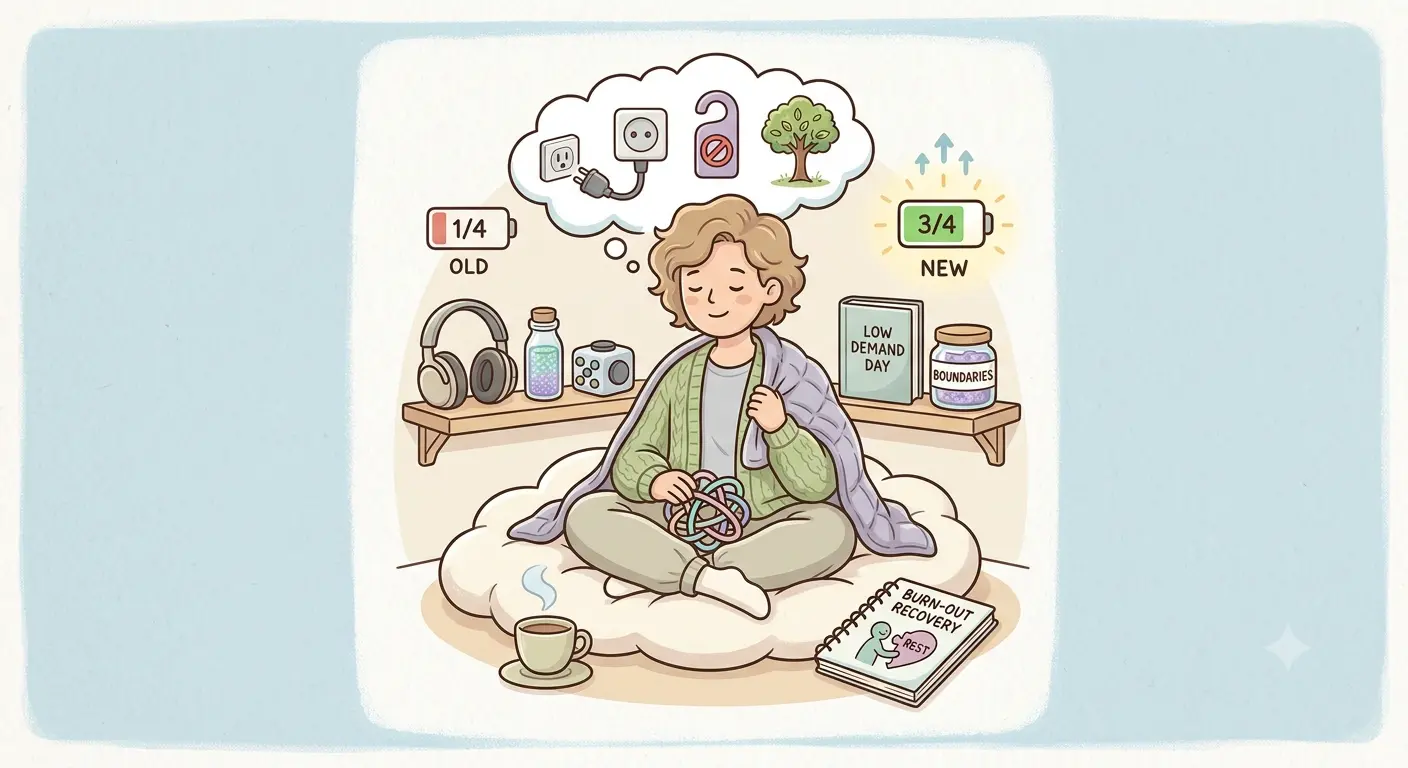
Recovery isn't about pushing harder in a friendlier wrapper. It's about giving both sides of the brain what they actually need: quiet, predictability, and enough gentle novelty to keep dopamine on speaking terms with you.
The three shapes of AuDHD burnout
- Executive shutdown. Tasks you used to do on autopilot suddenly feel impossible to start. This is ADHD paralysis dialled up by autistic exhaustion, your brain hasn't lost the skills, it's lost the fuel.
- Sensory collapse. Noise, light, clothing and food you tolerated last month are unbearable this month. The autistic side is asking for a quieter environment before it will let the ADHD side start anything.
- Masking hangover. After a stretch of over-performing, small social interactions feel disproportionately expensive. Recovery needs low-stakes contact, presence without performance.
Autistic burnout vs ADHD burnout vs AuDHD burnout: the signs compared
AuDHD burnout borrows from both, which is why it is often missed. This comparison is a general guide to common patterns, not a diagnostic tool, and everyone's mix looks a little different.
| Area | Autistic burnout | ADHD burnout | AuDHD burnout |
|---|---|---|---|
| Main driver | Long-term masking, sensory load and change | Overcommitting, chasing deadlines, running on urgency | Both at once: masking while forcing an interest-led brain through routine |
| Senses | Lower tolerance for noise, light, touch and crowds | Restlessness, craving stimulation then crashing | Needing quiet yet feeling under-stimulated, a push-pull that is hard to settle |
| Getting things done | Loss of previously reliable skills, routines feel out of reach | Procrastination, missed tasks, scattered focus | ADHD paralysis: knowing what to do but being unable to start |
| Social energy | Withdrawal, shutdowns, speech becoming harder | Irritability, emotional overwhelm, dropping contact | Wanting company but finding masking unaffordable |
| What tends to help | Lower demand, predictability, sensory rest | Fewer commitments, external structure, gentle novelty | Quiet, predictable rest plus small low-pressure novelty and presence without performance |
ADHD paralysis coping strategies that don't punish autistic needs
Most ADHD paralysis advice is loud, dopamine-first, and socially demanding. That works beautifully for some ADHD brains and terribly for AuDHD ones. Here are the strategies that tend to survive the crossover:
- Shrink the task, not the day. "Wash one plate" is a task. "Tidy the kitchen" is a project. AuDHD brains often need the first, especially in burnout.
- Use quiet, camera-optional body-doubling. Sharing space with another calm person borrows executive function without the sensory cost of a chatty productivity call.
- Give yourself a predictable start. Same time, same place, same opening ritual. Novelty helps once you've begun; predictability helps you begin.
- Name "done" before you start. "Done" is 10 minutes, or one paragraph, or the plate. Not "when I feel like stopping".
- Plan the recovery, not just the effort. AuDHD burnout worsens when rest is treated as a reward. Bake it into the schedule at the same weight as the task.
Neurodivergent-friendly accountability groups
Most online accountability platforms are built around neurotypical productivity: camera on, chat introductions, timed sprints, verbal check-ins. For an AuDHD nervous system in burnout, that structure can be more expensive than the task itself.
A neurodivergent-friendly accountability group looks different. Cameras optional and usually off. Silence is the norm. You can join late, leave early, nap through, or simply lie down with the group in the background. The "accountability" comes from co-regulated presence, not from being watched.
This is the shape of restful body-doubling. It preserves the executive-function boost ADHD brains get from shared presence, while giving autistic nervous systems the predictability and low sensory load they need to actually settle.
A gentler recovery arc
AuDHD burnout recovery usually moves in three phases: protect (radical rest, reduced input, no new commitments), rebuild (predictable anchors, tiny wins, low-stakes company), and experiment (adding one novel thing at a time and watching the recovery cost).
Most setbacks happen when someone tries to skip straight from protect to experiment. Rebuild is the phase that gets underestimated, and it's the phase where a quiet, neurodivergent-friendly community makes the biggest difference.
In the rebuild phase, the company needs to cost nothing sensory. Body doubling for autism and sensory overload explains the camera-off format, and restful body doubling covers why resting alongside someone still counts.
A quiet space to rebuild capacity
Restful body-doubling and gentle solution-focused check-ins for neurodivergent brains recovering from burnout.
Common questions
- How is AuDHD burnout different from ADHD burnout or autistic burnout?
- AuDHD burnout pulls in two directions at once. The ADHD side needs novelty and interest to get going, while the autistic side needs predictability, low sensory input and deep rest. Advice that suits only one side, such as high-energy accountability or strict routines, often deepens the shutdown for the other.
- How long does AuDHD burnout recovery take?
- It varies, but recovery usually takes weeks to months rather than days. Most people move through three phases: protect (rest and fewer demands), rebuild (small predictable anchors and quiet company) and experiment (adding one new thing at a time). Rushing the rebuild phase is the most common cause of relapse.
- What helps ADHD paralysis during burnout without causing sensory overload?
- Shrink each task to one tiny action, such as washing one plate, and decide what counts as done before you start. Quiet, camera-off company can lend you a little executive function without the noise of a busy call. Rest counts as part of the plan, not a reward for finishing.
- Why does standard productivity advice make AuDHD burnout worse?
- Most productivity advice is built for neurotypical energy: habit streaks, timed sprints, cameras on and verbal check-ins. In burnout, those demands cost more than the task itself. Low-demand, predictable support that lets you rest, arrive late or leave early is usually far more sustainable.
What to do next
One small thing to try today: pick the shortest item on your list and do it lying down, with no expectation of finishing. If that feels easier in company, the gentlest next step is a live guided relaxation — camera off, no talking, and free with an account.