Guides & gentle practices
Short, kind reads on staying mentally well with a chronic illness or long-term condition: fatigue and pacing, flare-up recovery, brain fog, chronic pain and life after therapy. Free to read, no membership needed.
Written for low-capacity days by Kim Clayden, a CNHC-registered solution-focused hypno/psychotherapist who lives with chronic illness herself. Short sections, no hustle, and nothing you need to be well enough to start, whether you live with ME/CFS, Long Covid, fibromyalgia, hypermobility syndromes, EDS, Marfans, PoTS, ADHD or AuDHD.
Start here
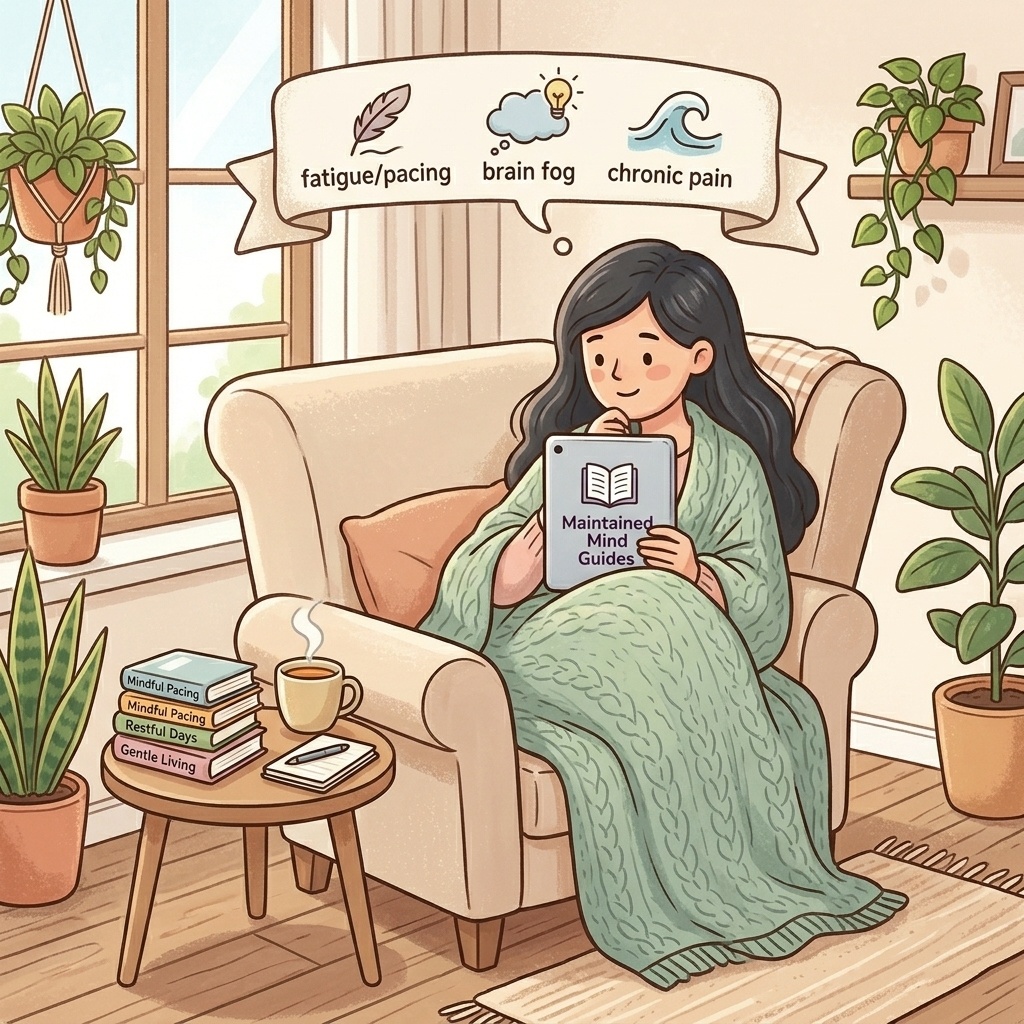
I have a long-term condition and I want help to stay positive & mentally well. Three free, low-energy reads to begin with.
Browse by theme
Three topic hubs that pull the guides together into one place.
Chronic Illness Self-Management
Pacing, fatigue, flare-ups, brain fog and nervous system regulation, the whole picture of managing a long-term condition day to day.
ExploreBody Doubling
What body doubling is, why it works for ADHD, autism and chronic illness, and how a restful version differs from productivity co-working.
ExploreBurnout & Recovery
Recognising burnout, recovering capacity slowly, and holding your baseline steady after therapy or a period of collapse.
Explore
Want something live rather than something to read? The free live guided relaxations are open to anyone with a free account, camera off, lying down, nothing to prepare.
Energy, pacing and flare days
Fatigue, post-exertional malaise, boom-and-bust, and gentler ways through a symptom spike.
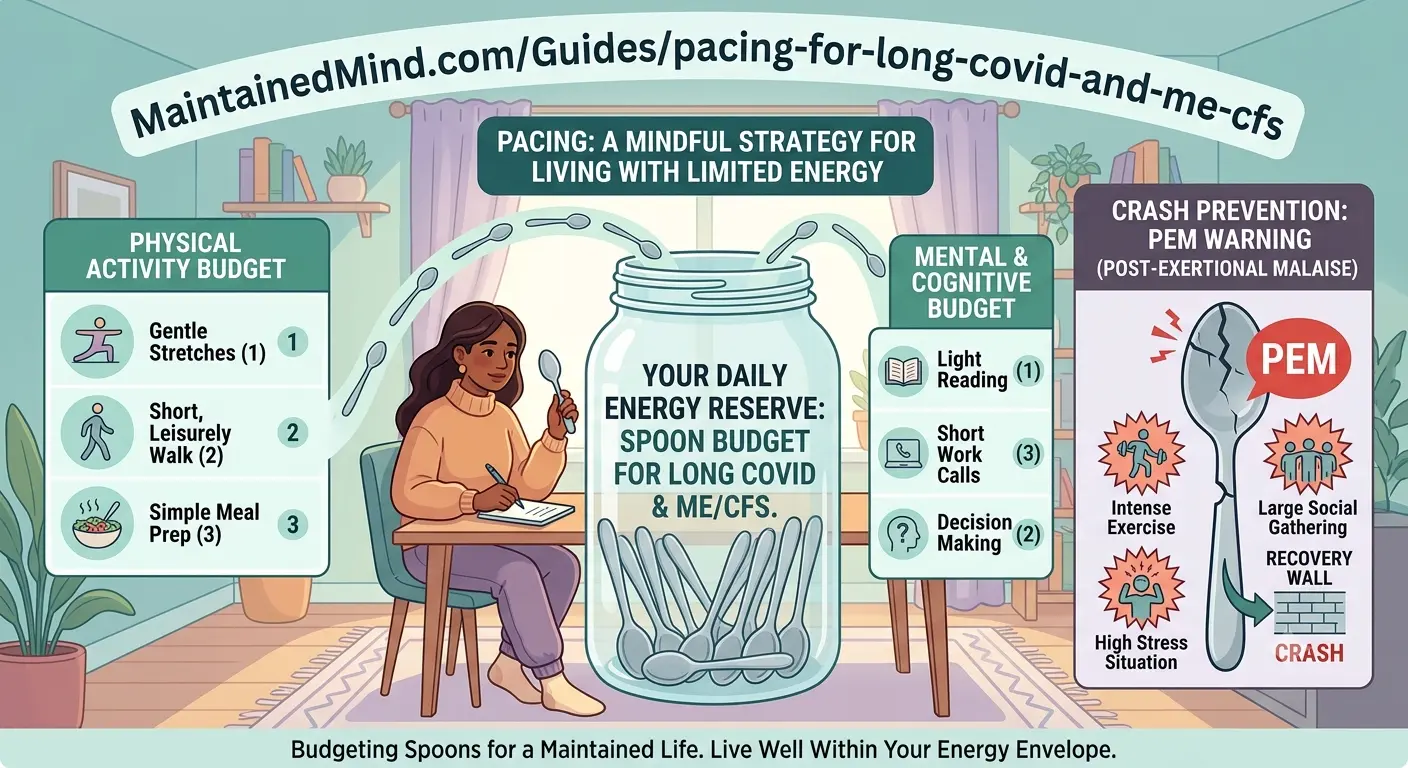
Pacing Strategies for Long Covid and ME/CFS
Practical pacing skills for post-exertional malaise, plus fibromyalgia brain fog tools that don't require energy you don't have.
Read guideLast reviewed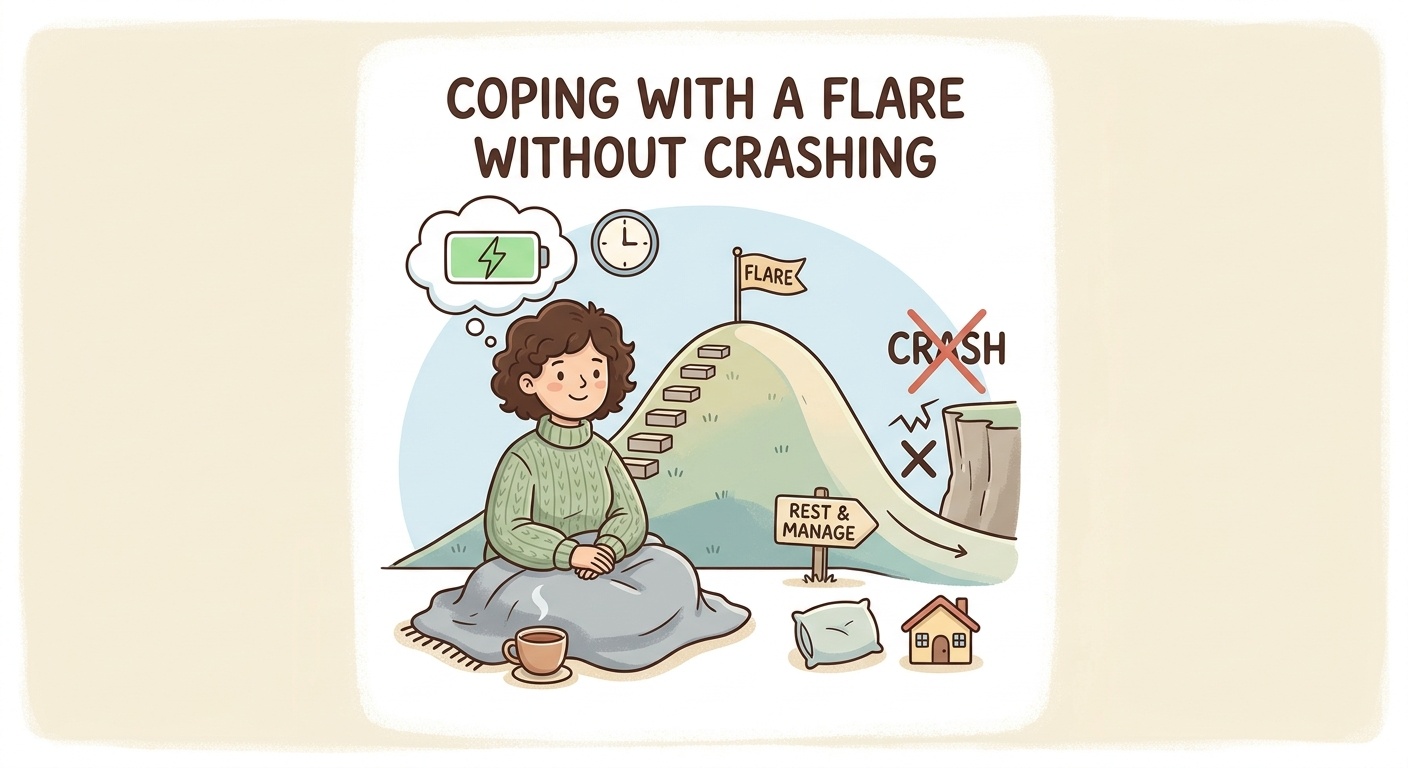
Coping With a Flare Without Crashing
A practical flare-day plan to slow the spiral, protect your baseline, and ride out a symptom spike.
Read guideLast reviewed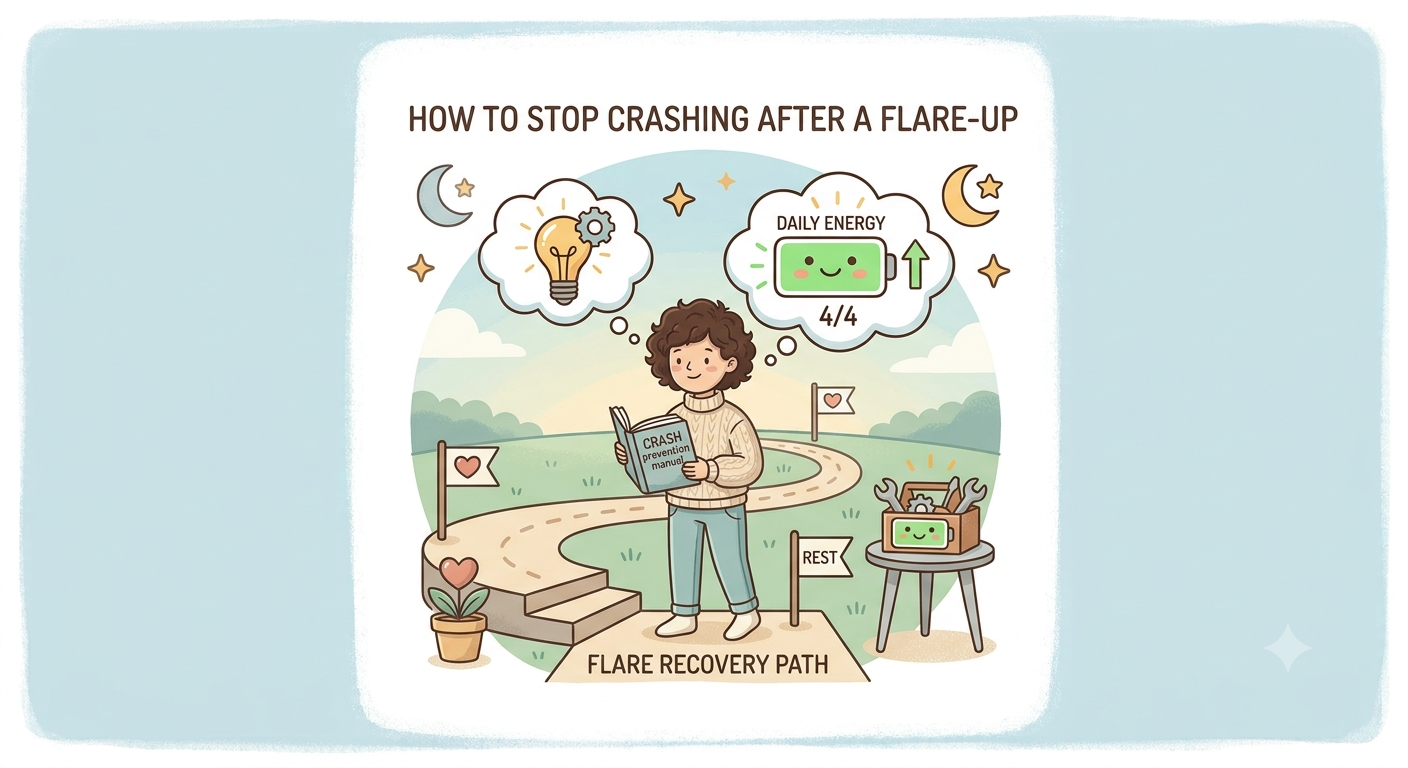
How To Stop Crashing After a Flare-Up
Break the boom-and-bust cycle: early warning signs, a flare version of your routine, and a gentler way back after a crash.
Read guideLast reviewed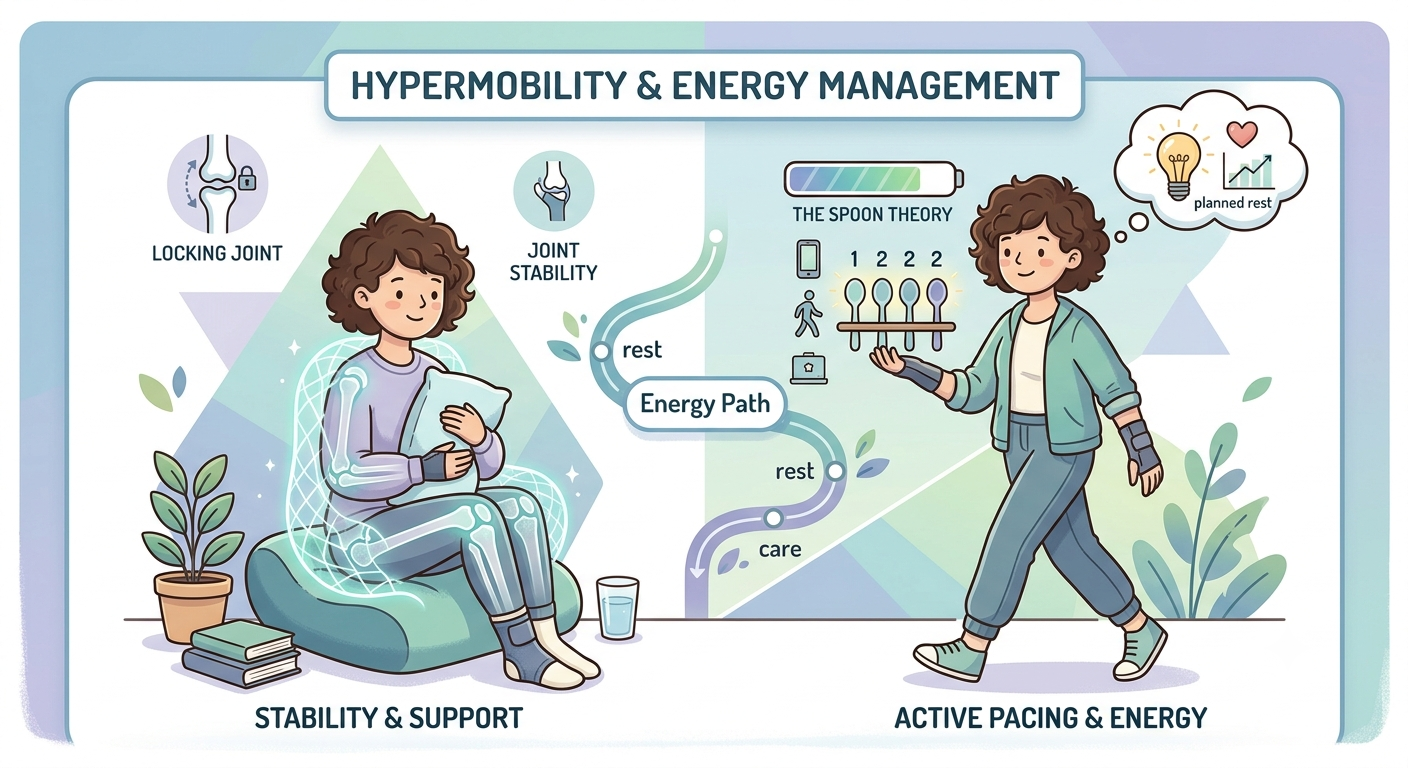
Hypermobility, Fatigue & Pacing
Why hypermobile bodies (hEDS/HSD) run out of energy faster, joint-kind rest, and pacing that keeps physio going on flare days.
Read guideLast reviewed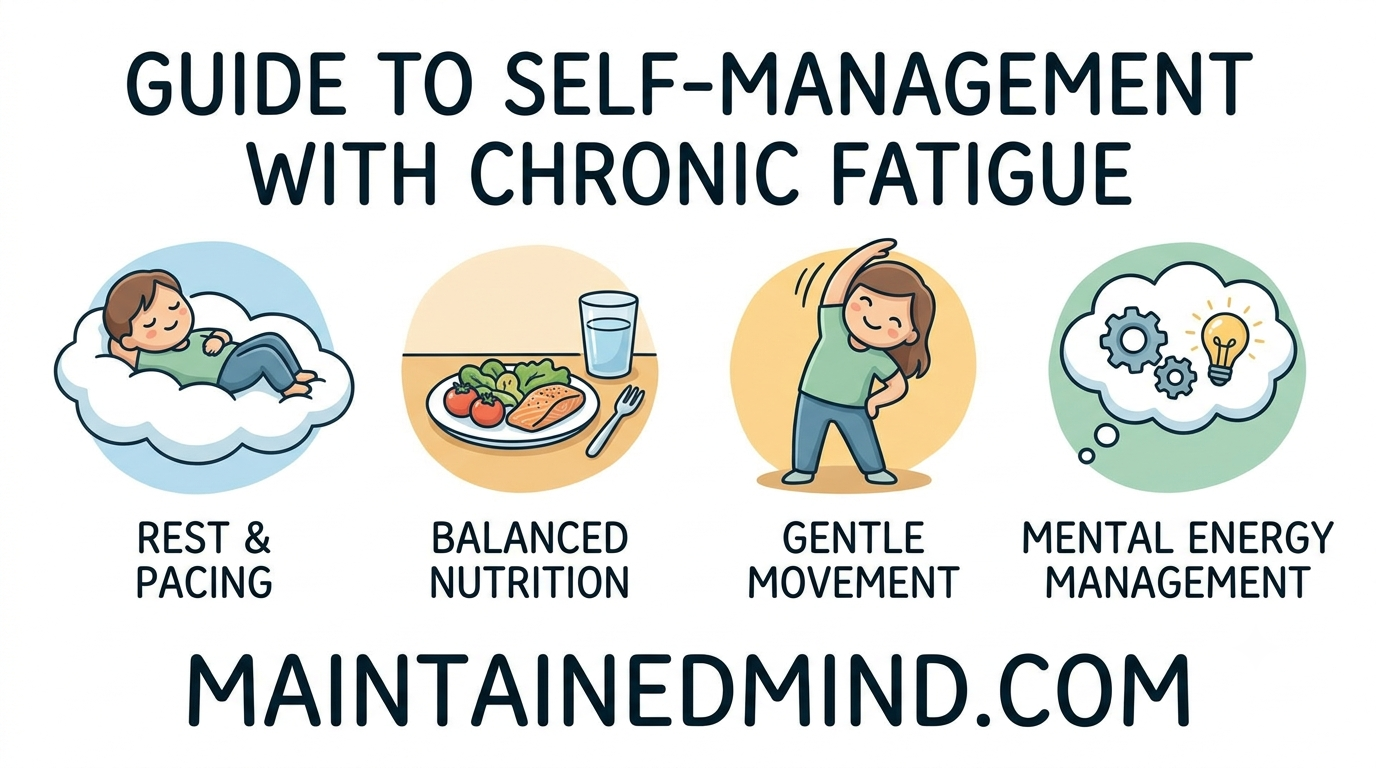
Self-Management Habits With Chronic Fatigue
Tiny anchors, pacing-friendly routines, and low-pressure ways to keep self-management habits going on hard days.
Read guideLast reviewed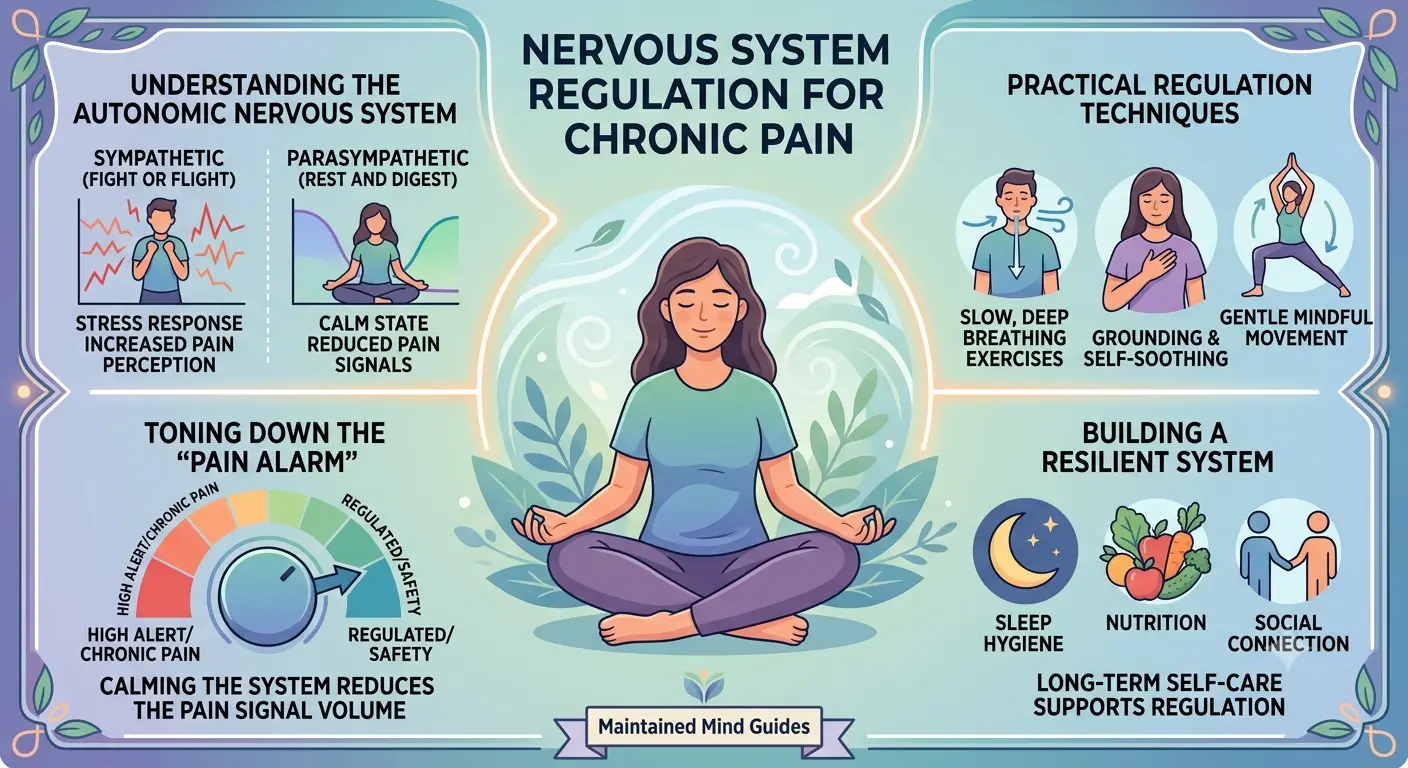
Nervous System Regulation for Chronic Pain
How solution-focused peer support and gentle self-hypnosis techniques calm the pain-alarm system and support neuroplasticity.
Read guideLast reviewed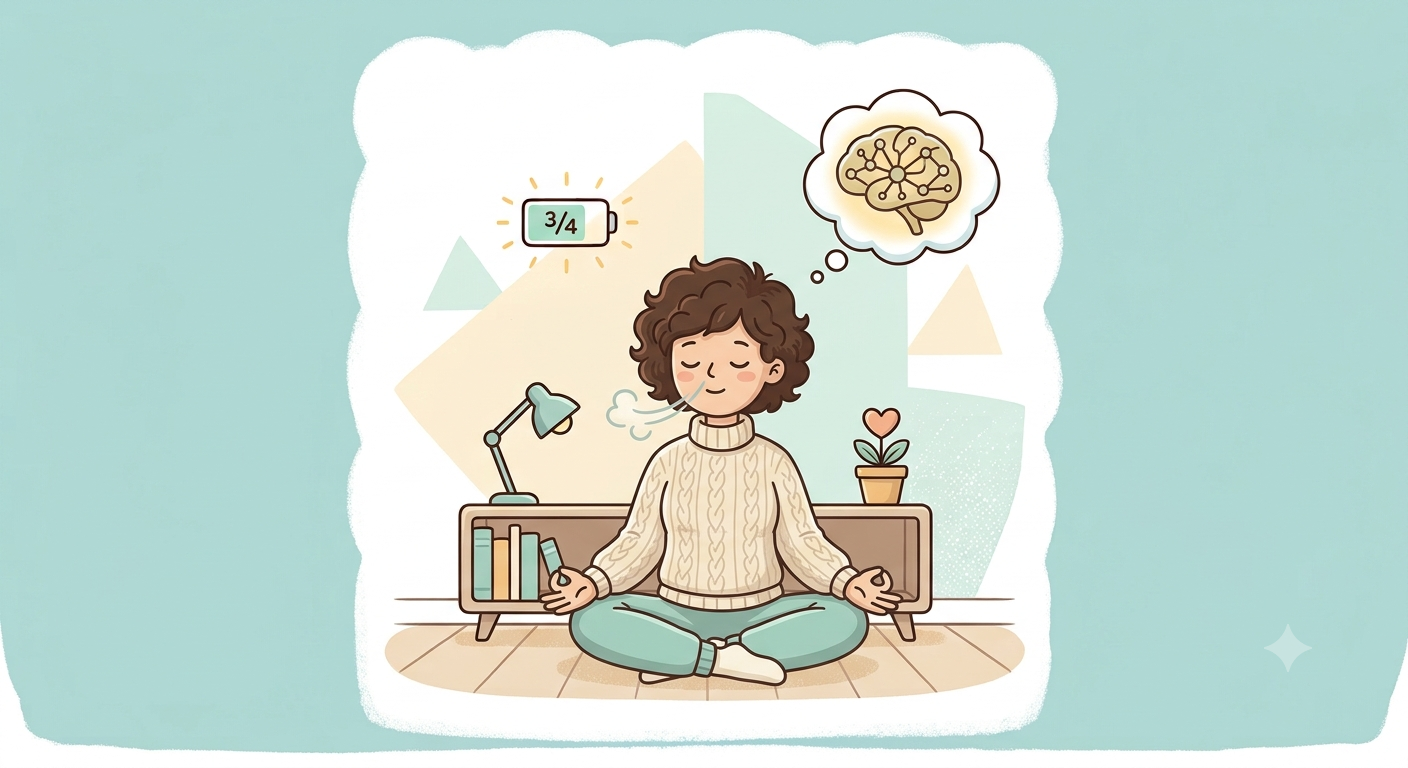
Neuroplasticity Exercises for Chronic Pain
Small, low-energy practices grounded in solution-focused therapy, designed for restful body-doubling sessions.
Read guideLast reviewed
Spoon Theory Explained
What spoon theory means, how to count your spoons, and gentle ways to protect your energy when you live with a chronic illness.
Read guideLast reviewed
The October Slide
Why fatigue, pain and brain fog often worsen as the seasons turn, and a gentle autumn plan for pacing, mood and flare days.
Read guideLast reviewed
Brain fog, focus and executive function
Cognitive load, starting things on low-capacity days, and keeping routines that don't demand energy you don't have.

What is Brain Fog?
What brain fog actually is, what it feels like from the inside, why long-term conditions cause it, and gentle, realistic ways to clear the haze.
Read guideLast reviewed
Brain Fog & Fatigue in Fibromyalgia, Hypermobility/EDS and POTS
Why fibromyalgia, hEDS/HSD and POTS cause brain fog and fatigue, and practical, low-energy ways to protect your capacity.
Read guideLast reviewed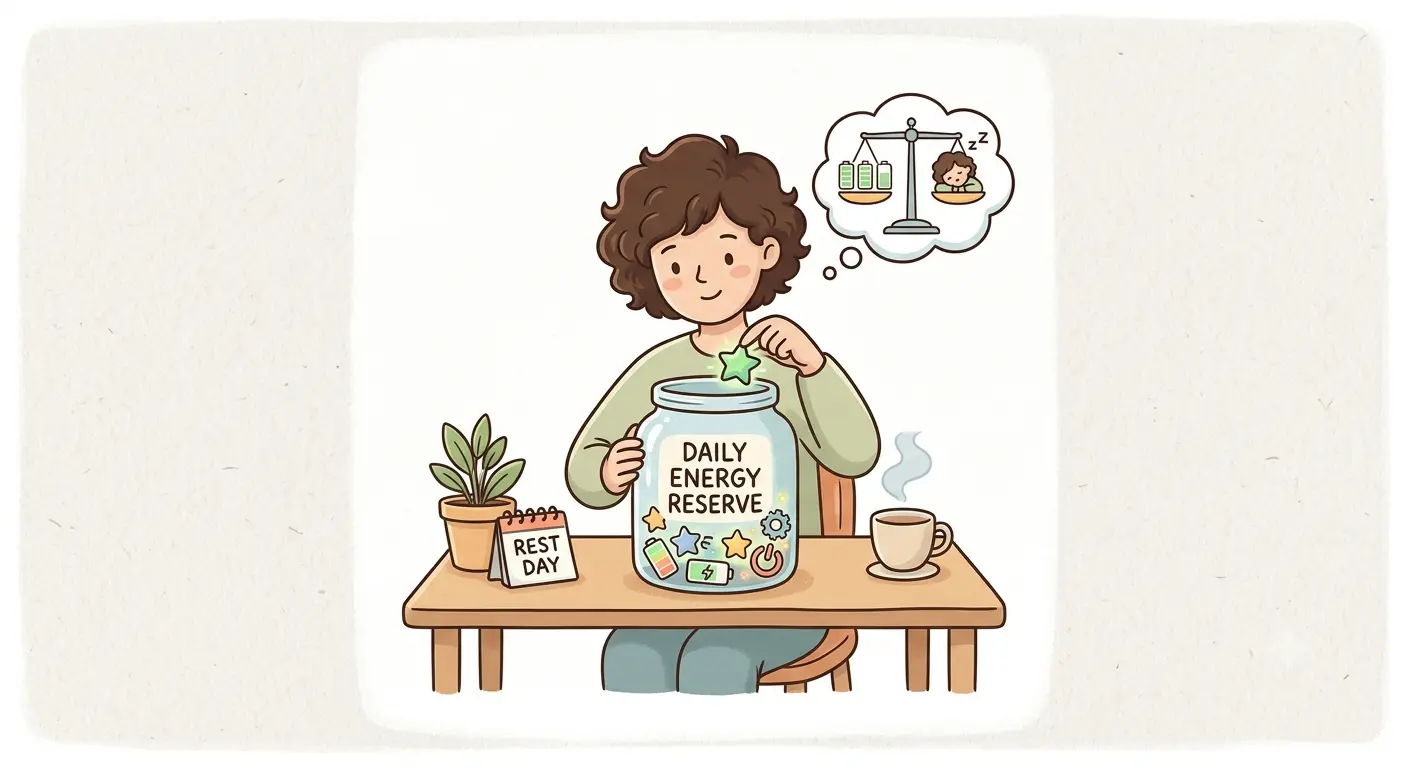
Brain Fog Management Tools
Practical tools and gentle routines for chronic illness, pacing, cognitive load, and a spoonie-supportive community you can use on a bad day.
Read guideLast reviewed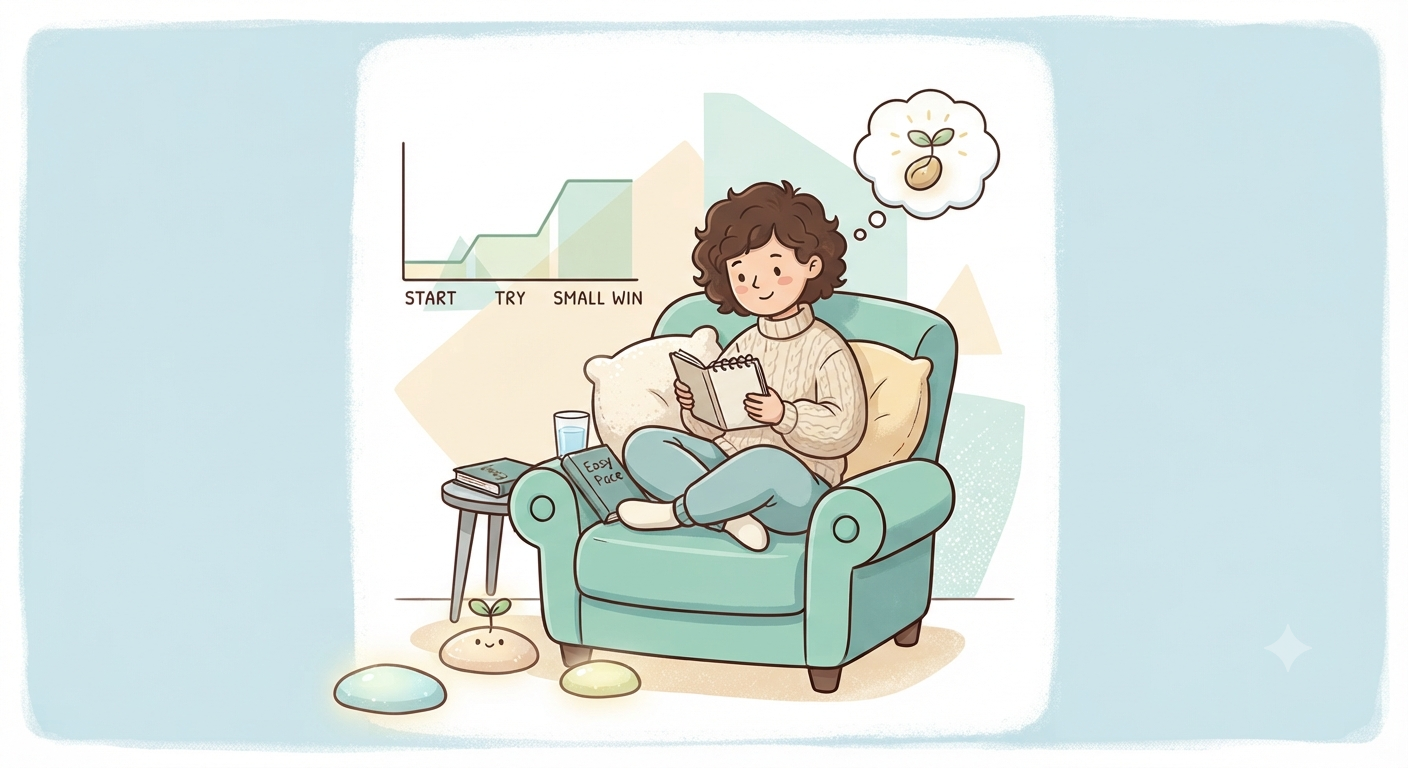
Low-Pressure Productivity for Executive Dysfunction
Self-compassion tools, gentle mental health check-ins, and a neurodivergent-friendly routine you can actually keep.
Read guideLast reviewed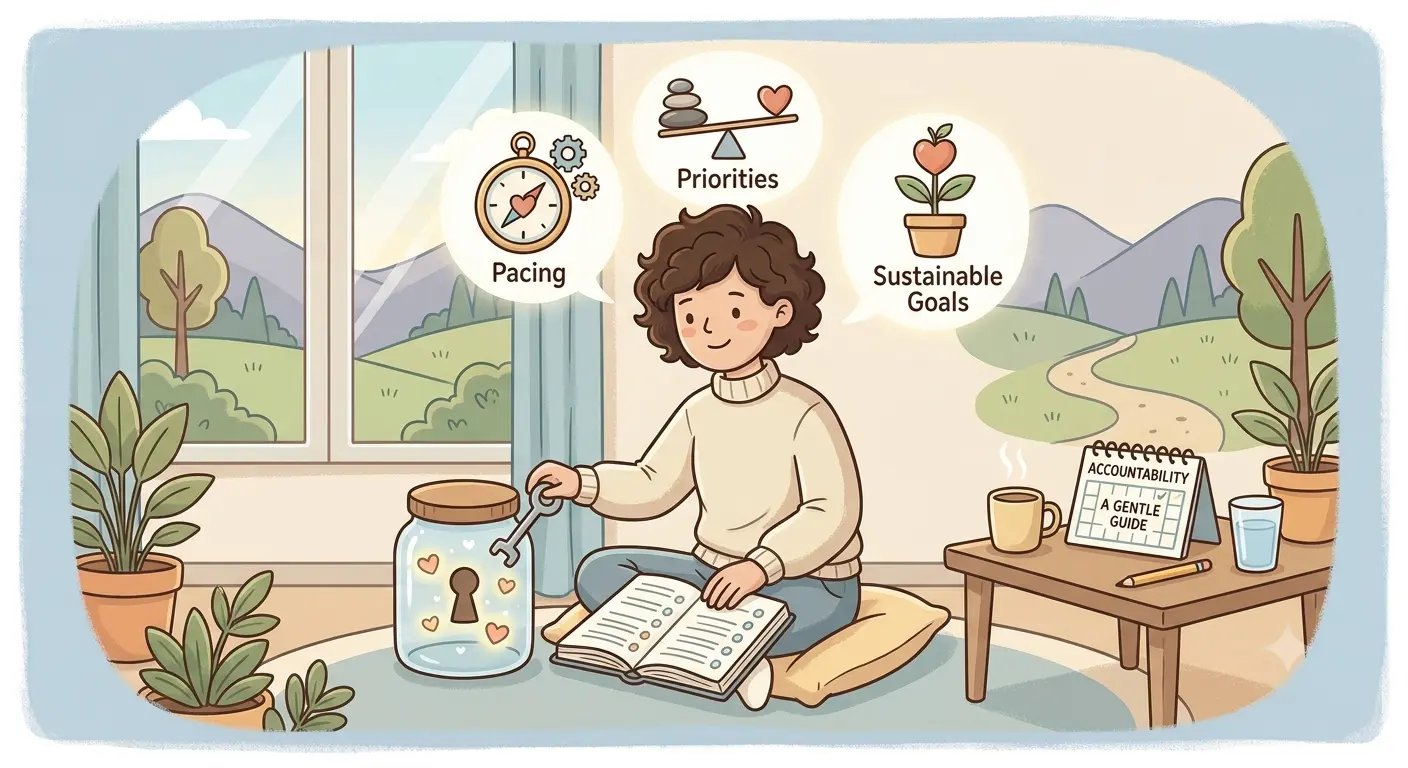
Accountability Without Hustle
Why traditional accountability triggers a chronic-illness stress response, and gentle alternatives that support pacing and follow-through.
Read guideLast reviewed
Mood, grief and life after therapy
Low days, identity shifts, burnout and holding your mental health baseline once support ends.

Chronic Illness, Low Mood and Grieving Your Old Self
Why low mood and grief come with a long-term condition, how identity shifts after diagnosis, and gentle ways to steady yourself.
Read guideLast reviewed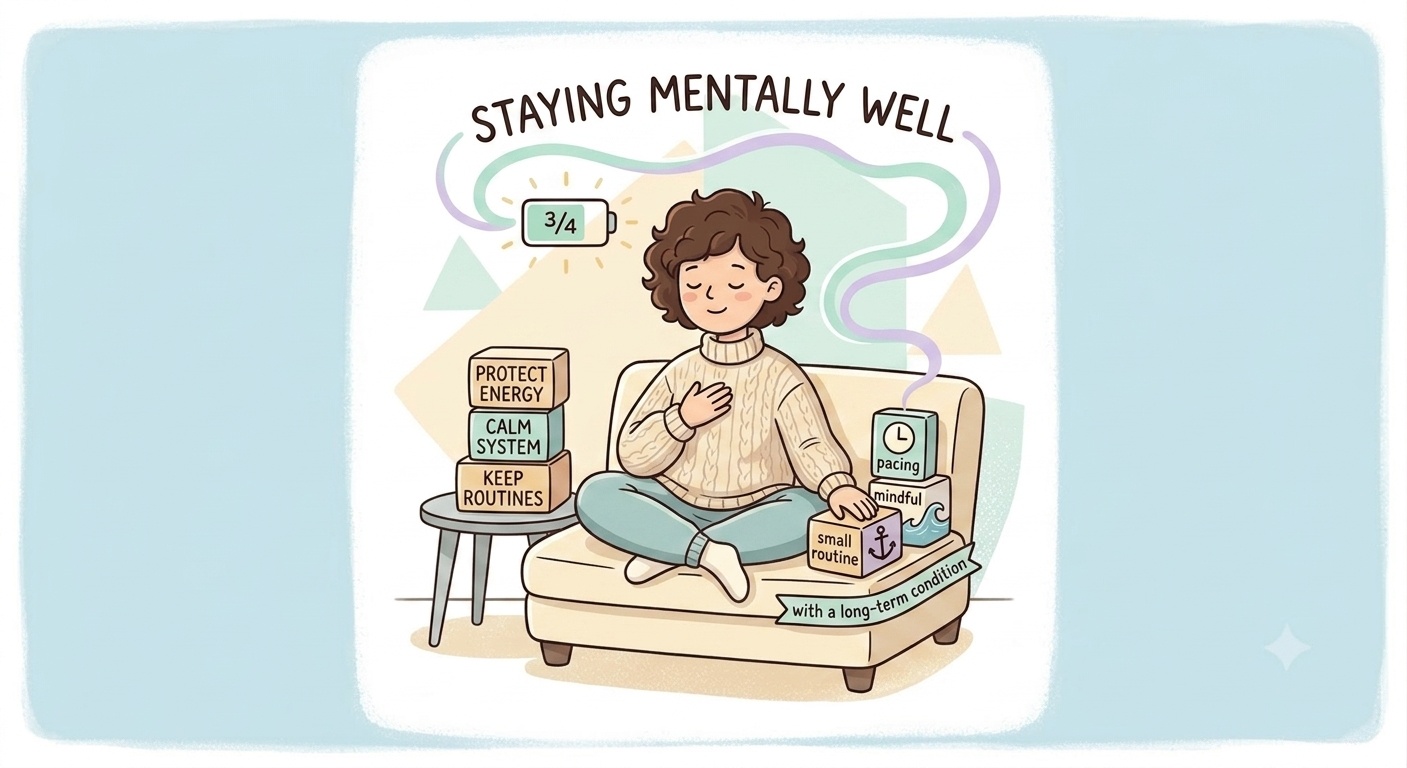
Staying Mentally Well With a Long-Term Condition
Gentle maintenance for grief, low days and identity shifts while living with chronic illness.
Read guideLast reviewed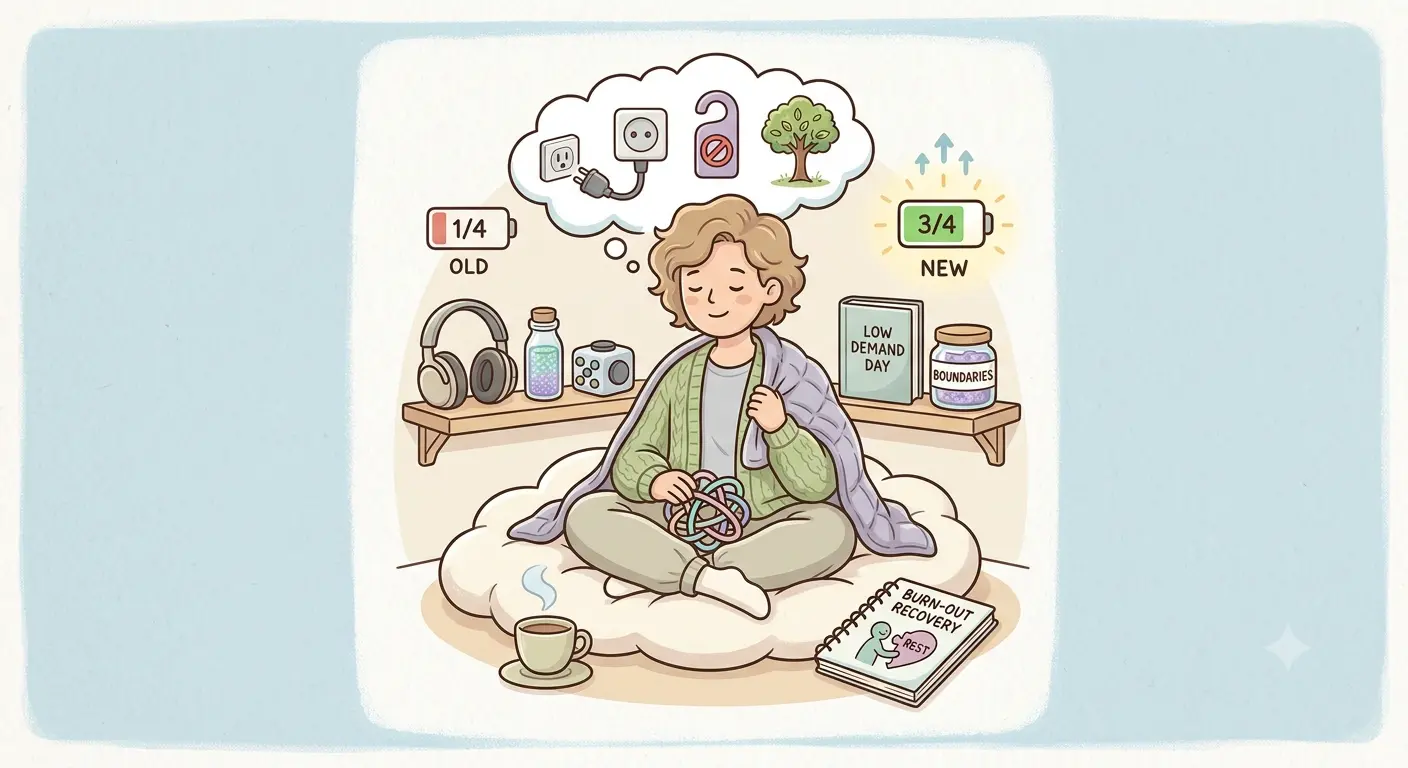
AuDHD Burnout Recovery
Neurodivergent-friendly accountability, ADHD paralysis coping strategies, and quiet ways to rebuild capacity without pushing back into burnout.
Read guideLast reviewed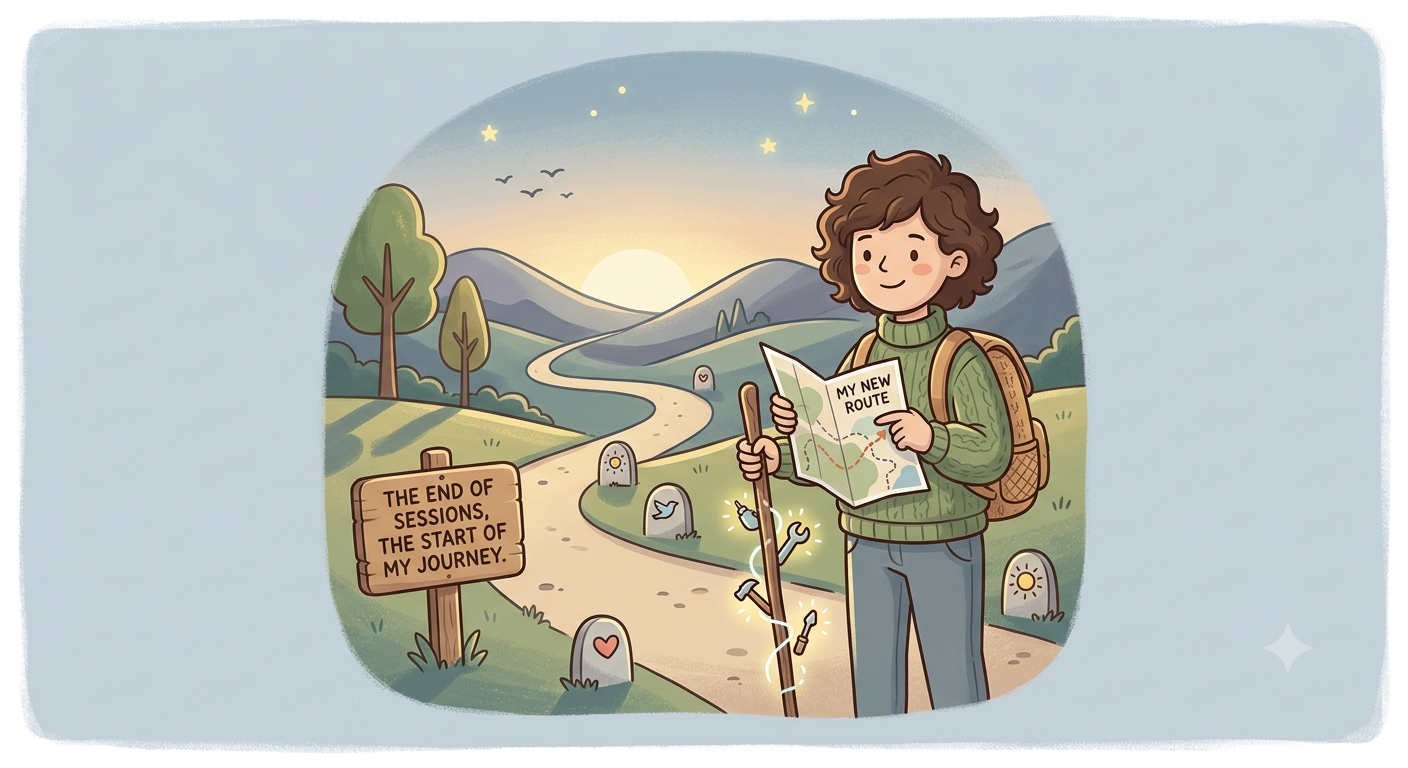
What To Do When Therapy Ends
A gentle post-therapy guide to maintaining your mental health baseline and keeping your hard-won strategies on track.
Read guideLast reviewed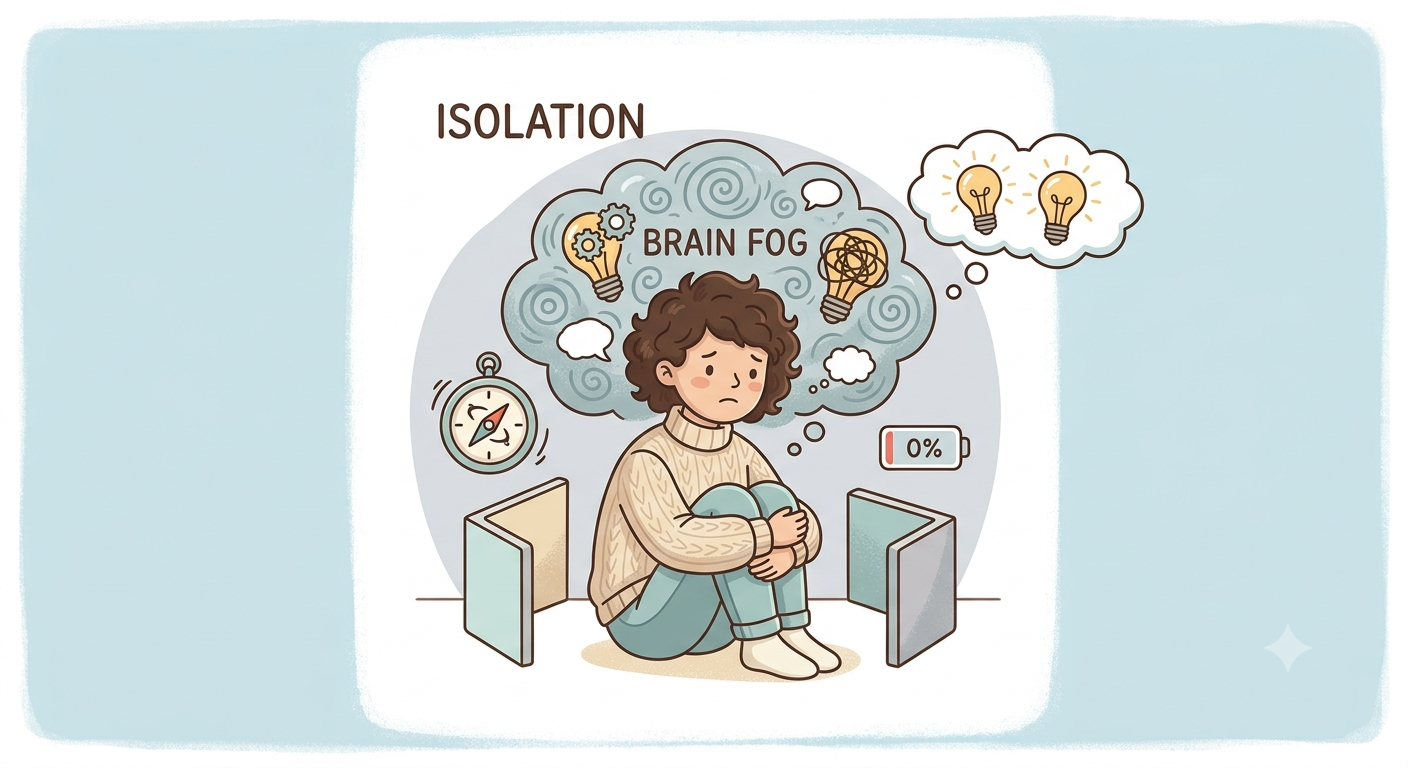
Isolation & Brain Fog After Therapy
The quiet gap after therapy ends, why isolation and brain fog often surface, and gentle post-therapy support to hold your baseline steady.
Read guideLast reviewed
Restful company and body doubling
Quiet, camera-optional company for ADHD, autism, AuDHD and fatigue, without the hustle.

Body Doubling for Chronic Pain
How restful, camera-optional company helps with the isolation and pacing challenges of chronic pain.
Read guideLast reviewed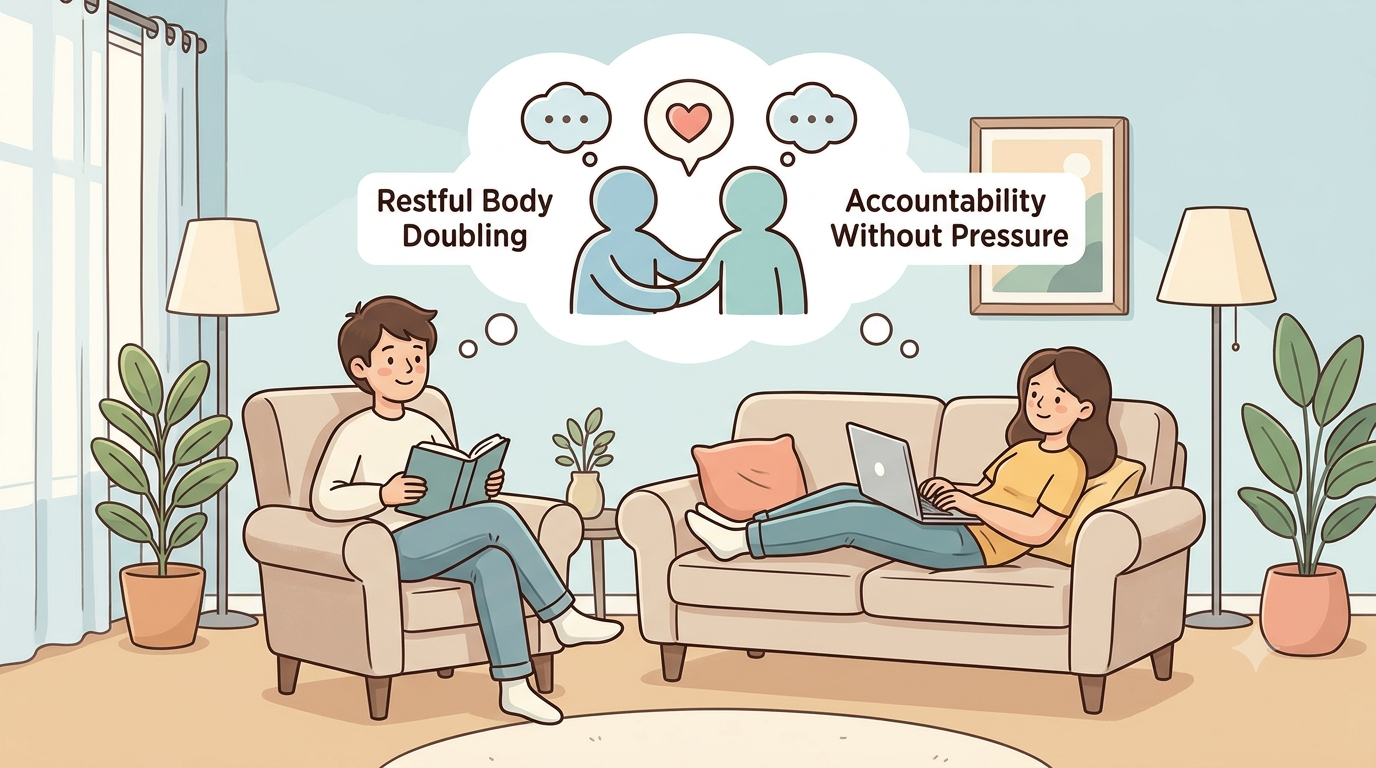
What is Restful Body-Doubling?
A gentle introduction to body-doubling, what it is, why it helps, and how our restful sessions work.
Read guideLast reviewed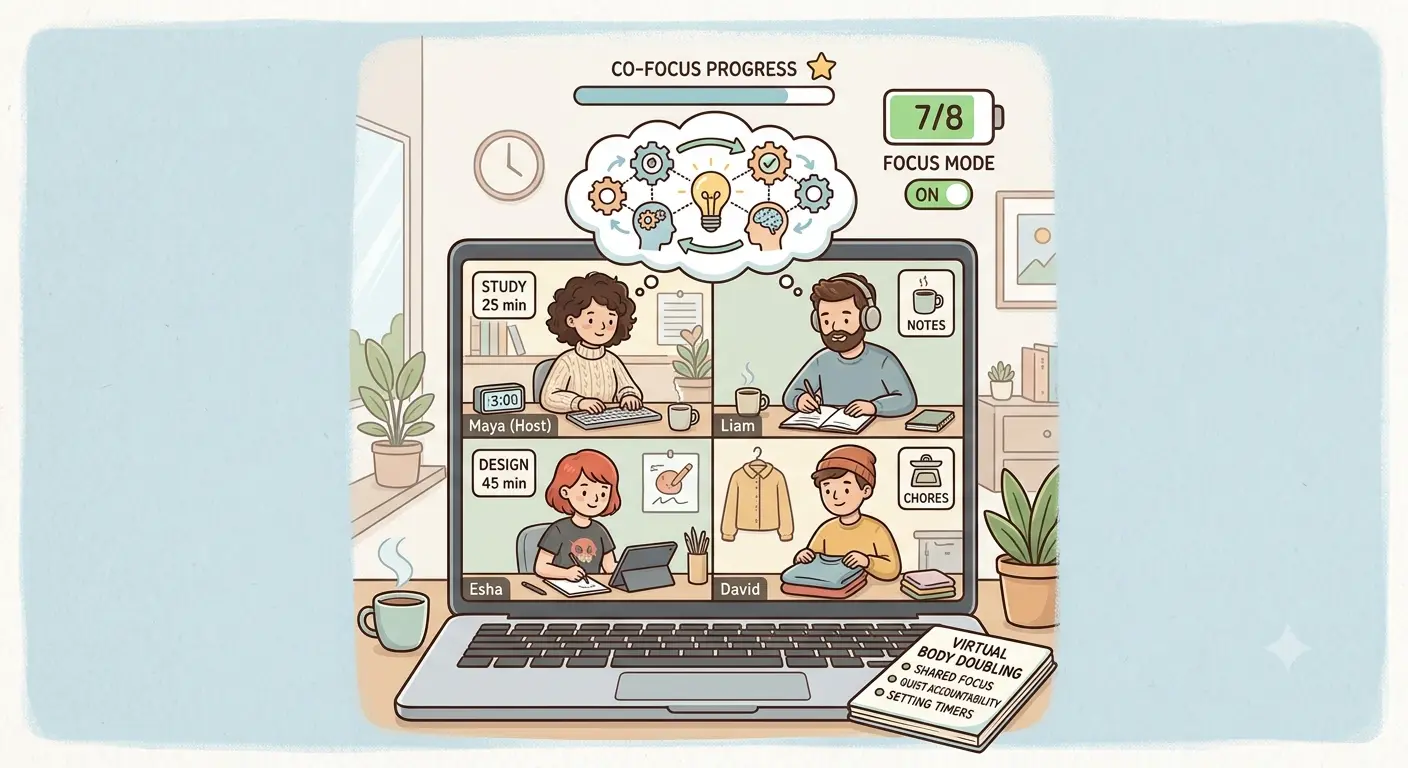
Virtual Body-Doubling for ADHD
How online focus sessions borrow another person's executive function, and why the gentlest versions work best for ADHD brains with brain fog or fatigue.
Read guideLast reviewed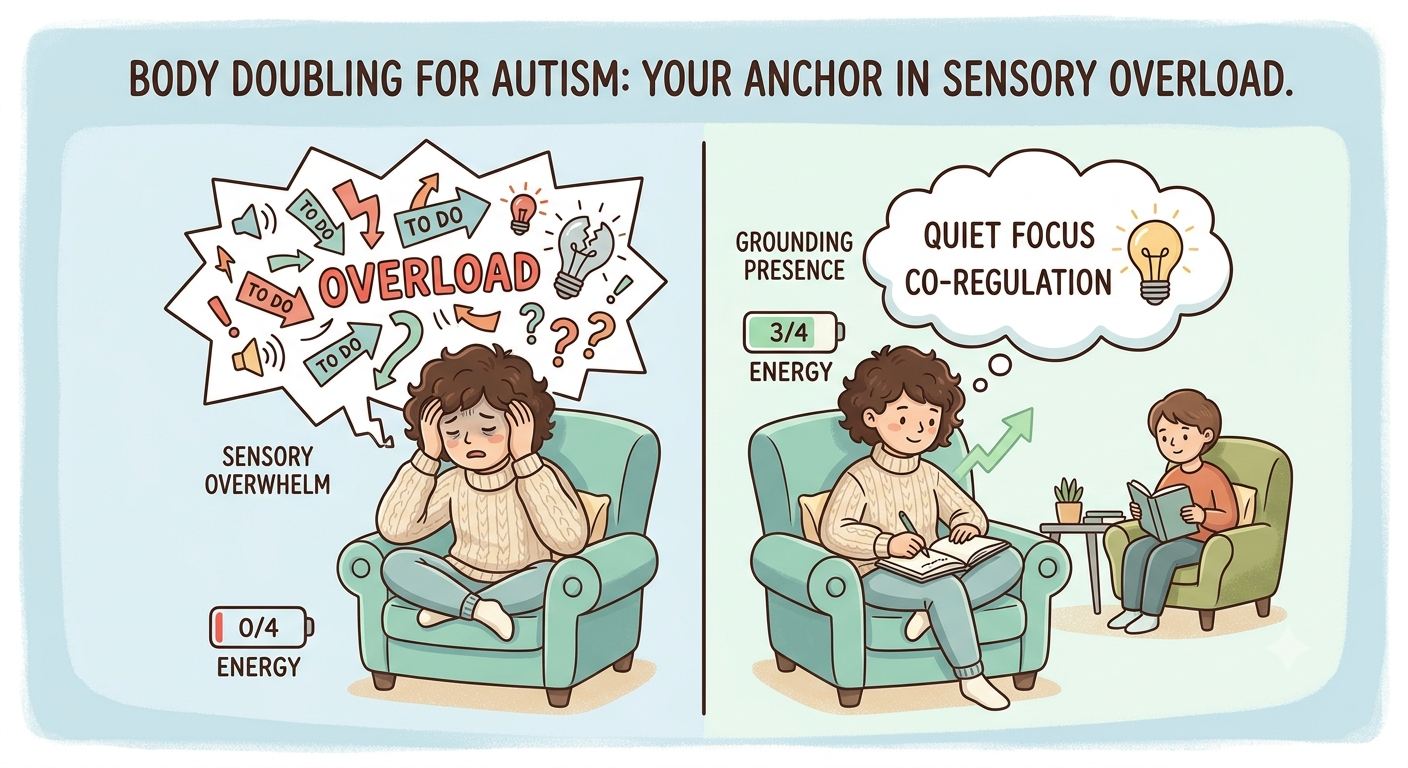
Body Doubling for Autism & Sensory Overload
Why traditional body-doubling can overwhelm autistic senses, and how a restful, camera-optional approach supports autism, AuDHD and sensory overload.
Read guideLast reviewed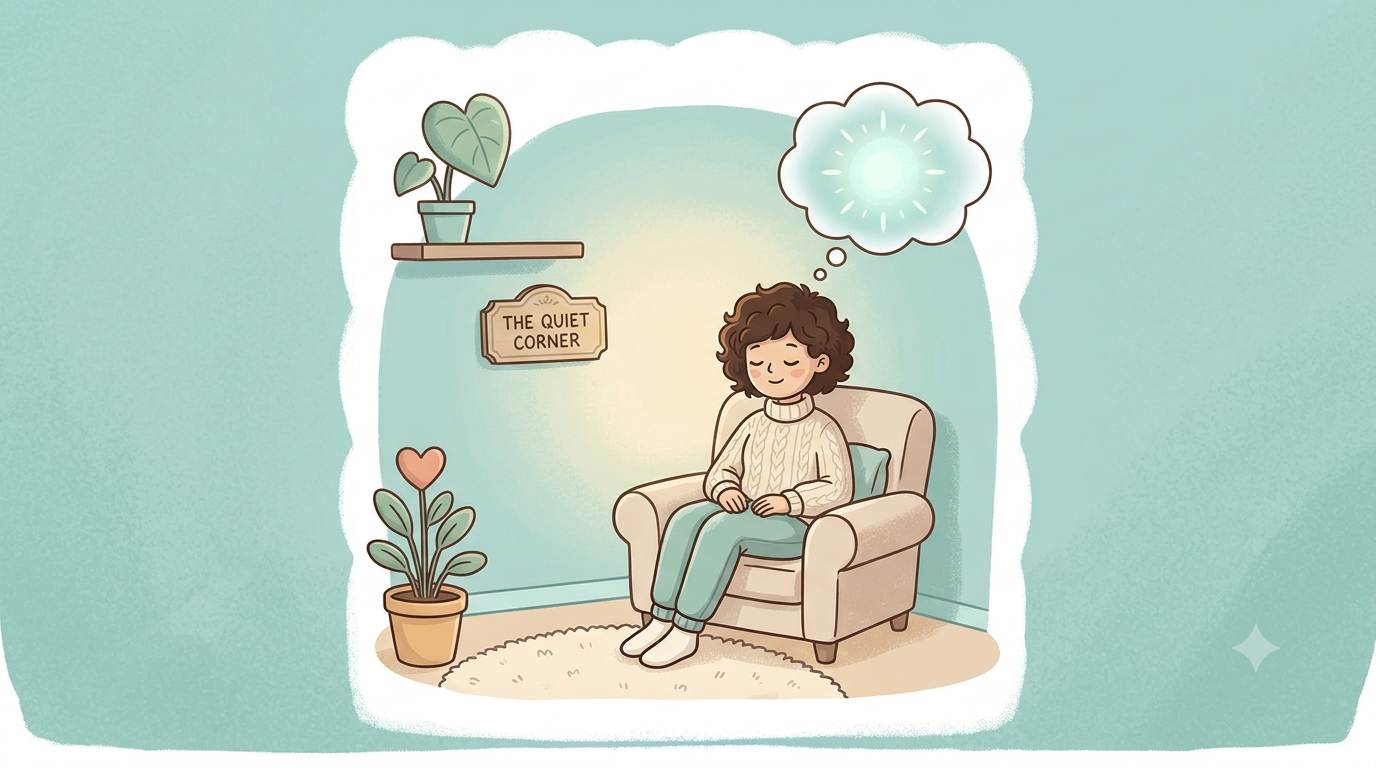
The Quiet Corner
A shared, wordless pause for members. Co-regulation without pressure, connection without needing to speak.
Read guideLast reviewed
How to use these guides
Pick the one that matches today, not the one that looks most useful in theory. Read a single section if that is all you have, and come back when there is more in the tank.
- Are the guides free to read?
- Yes. Every guide on this page is free, with no account, no paywall and no email sign-up needed.
- Who writes them?
- Kim Clayden, a CNHC-registered solution-focused hypno/psychotherapist who lives with chronic illness herself. Each guide carries the date it was last reviewed.
- How often are they updated?
- Guides are reviewed and refreshed regularly, and the last reviewed date is shown on each card and at the top of every guide.
- What if reading feels like too much today?
- Skim the headings and stop there, or join a free live guided relaxation instead. Nothing here needs to be finished in one sitting.
- Do the guides replace medical or therapeutic care?
- No. They sit alongside your care as gentle, practical support, and they are not a substitute for advice from your GP, consultant or therapist.