Nervous System Regulation for Chronic Pain
How a dysregulated nervous system amplifies pain, and the gentle, evidence-informed practices that help calm it.
 Written by Kim Clayden — HPD, DfSFH, MNCH, AfSFH (reg), CNHC (reg)
This guide is educational and does not replace medical care. Please speak with a qualified clinician about any persistent pain.
Pain is a nervous system output, not a tissue reading
Modern pain science is clear: chronic pain is produced by the nervous system based on how safe or unsafe it judges the body to be. Tissue damage is only one input. Stress, sleep, past experience, meaning, and the state of your autonomic nervous system are all inputs too, sometimes bigger inputs than the tissue itself.
This is not "pain is in your head". Pain is very real, and it's produced by a real organ, the nervous system. The good news: because pain is an output, it responds to inputs. Regulating the nervous system genuinely changes the pain signal.
The two states, briefly
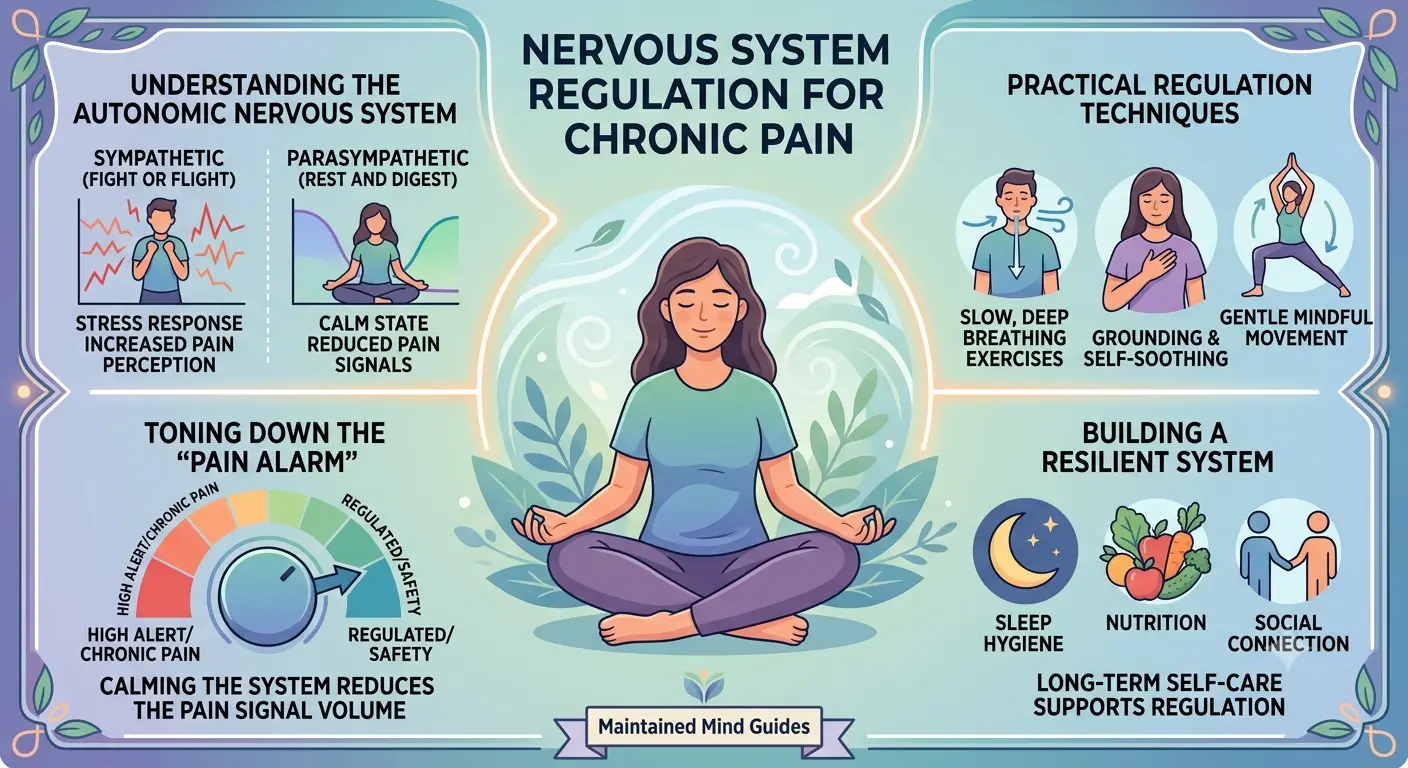
Your autonomic nervous system spends its time somewhere between two ends: the sympathetic "do something" state and the parasympathetic "rest and repair" state. Chronic pain tends to keep people stuck in a low-grade sympathetic hum, the pain alarm stays on, sleep gets shallower, digestion slows, and the world feels slightly more threatening than it is.
Nervous system regulation isn't about erasing the sympathetic state, you need it. It's about making the parasympathetic state accessible again, so your body actually gets time to repair.
Practices that shift the state
- Extended exhale breathing. Inhale for a count of 4, exhale for a count of 6–8. The longer exhale directly stimulates the vagus nerve and tips you toward parasympathetic. Two minutes is often enough to notice.
- Orienting to safety. Slowly look around the room and name neutral or pleasant things you can see. This gives the threat-detection part of the brain new data.
- Gentle self-hypnosis and guided relaxation. Online hypnotherapy for chronic illness works largely by teaching the nervous system, under safe focused attention, that it can drop into a calmer state on cue. Short daily practice tends to outperform long occasional sessions.
- Co-regulation. Nervous systems settle more easily near other regulated nervous systems. A short body-doubling session with a calm group can do what half an hour alone can't.
- Solution-focused reflection. Regularly asking "what went a little better today?" nudges attention off threat-scanning and lays down new neural pathways. Over months, this changes the felt sense of the day.
Why solution-focused peer support helps chronic pain
Most peer support online is built around venting. Venting has its place, but for a nervous system already stuck in threat-monitoring, an hour of shared pain talk can deepen the groove. Solution-focused peer support does the opposite: it structures the conversation around what's working, what's improving, and what small next step is possible.
This isn't toxic positivity. It's a deliberate use of attention. Where attention goes, neuroplasticity follows.
Neuroplasticity is on your side
The same brain that learned the chronic pain pattern can learn a calmer one. It takes repetition, safety, and the right kind of company, but the biology is fully on your side. Most people notice small shifts inside a few weeks of consistent practice and larger shifts across months.
Maintained Mind combines restful body-doubling with fortnightly solution-focused check-ins and a library of guided relaxations, all designed around nervous system regulation for chronic illness and chronic pain.
Common questions
- What does nervous system regulation mean?
- It means helping a body that has been stuck in a protective, high-alert state to spend more time in a settled one. In persistent pain this matters because a sensitised system amplifies the pain signal itself, independently of tissue damage.
- Can calming the nervous system reduce chronic pain?
- It can reduce how loud and how frequent the pain signal is for many people, because threat and pain share the same alarm circuitry. It is not a cure and it does not mean the pain was imagined.
- How long do regulation exercises take to work?
- Individual practices often produce a small shift within minutes, but the lasting change comes from repetition over weeks. Short and frequent beats long and occasional.
- Do I need to be relaxed for this to work?
- No. The aim is a small movement toward safety, not deep relaxation. Even a slightly longer out-breath or a minute of orienting around the room counts as practice.
Regulate with quiet company
A gentle, science-grounded community for nervous system regulation and gentle maintenance.
References & further reading
- NHS: Breathing exercises for stress - NHS.uk
This guide is educational and does not replace individual medical advice. Please consult a qualified clinician about your own health.