Brain Fog & Fatigue in Fibromyalgia, Hypermobility/EDS and POTS
Why these conditions steal your clarity and energy, and practical, low-pressure ways to get some of it back.
 Written by Kim Clayden — HPD, DfSFH, MNCH, AfSFH (reg), CNHC (reg)
If your brain feels like it is running through porridge
You are not alone, and you are not imagining it. Brain fog and fatigue are some of the most reported symptoms in fibromyalgia, hypermobile Ehlers-Danlos syndrome (hEDS)/hypermobility spectrum disorder (HSD), and postural orthostatic tachycardia syndrome (POTS). They are real, physiological effects, not laziness, depression, or a lack of effort.
The good news is that small, consistent changes to how you pace, rest, and calm your nervous system can free up more capacity than you might expect. This guide is written for low-energy days: short sections, no hustle, and nothing that requires you to be well enough to start.
What is actually happening
Each condition drains energy through a slightly different mechanism, but they often overlap, and they all load the nervous system.
Fibromyalgia
The nervous system becomes sensitised to pain and threat signals. The brain stays in a low-level vigilance state, which burns cognitive fuel and makes ordinary stimuli feel overwhelming. Brain fog here often shows up as word-finding difficulty, poor short-term memory, and trouble filtering distractions.
Hypermobility / EDS and HSD
Connective tissue is more elastic than usual, so joints, blood vessels and organs need extra muscular effort to stay stable. The body is constantly making tiny corrections. That background effort is exhausting, and the autonomic nervous system can become reactive, adding dizziness, palpitations and temperature swings to the fatigue.
POTS
Blood pressure and heart rate do not adjust smoothly to standing or sitting up. The brain receives less consistent oxygen and glucose, especially when upright, which produces fog, lightheadedness, and a wiped-out feeling that rest alone does not fix.
Practical ways to ease brain fog today
1. Reduce decisions, not dignity
Every decision uses energy. On a foggy day, decide once and repeat: one breakfast, one outfit formula, one route for admin. Use a single written list so your brain does not have to hold tasks in working memory.
2. Anchor your senses
A steady sensory environment lowers the nervous system's workload. Soft light, familiar music or silence, a weighted blanket, and a cool room can all reduce the background processing that feeds fog.
3. Move in the position that suits your body
For POTS, reclined or lying-down movement is usually kinder than upright exercise. For hEDS/HSD, short, joint-supported sessions beat long ones. Think of movement as nervous-system regulation, not fitness. Stop before you feel tired.
4. Eat and drink strategically
Dehydration and blood-sugar dips worsen fog quickly. Small, regular meals with protein, plus fluids and salt if your clinician has advised them for POTS, can stabilise energy within a day or two.
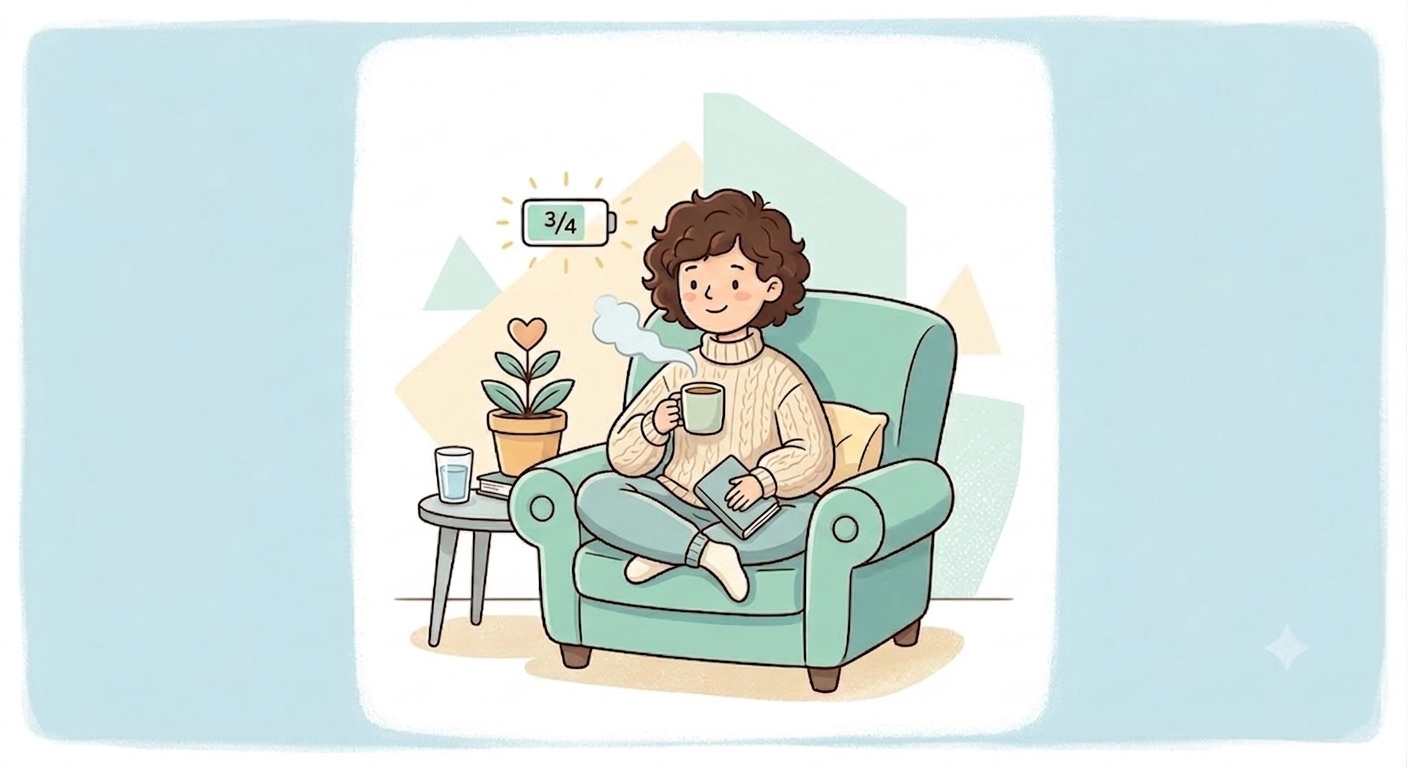
5. Rest before you crash
The boom-and-bust cycle is common in all three conditions. Rest taken early, before symptoms spike, protects tomorrow's energy. Rest taken after a crash only recovers a fraction.
Why restful company helps
Human nervous systems regulate each other. When you rest alongside calm, quiet company, your brain mirrors that safety signal. Cortisol drops, the parasympathetic system switches on, and the brain finally has the conditions it needs to think clearly again.
This is the idea behind restful body-doubling: not productivity, not performance, just gentle co-regulation. Camera off, no talking required, lying down completely counts. It is especially useful on days when leaving the house or holding a conversation feels impossible.
A note on pacing and hope
Brain fog and fatigue can feel like losing yourself. They are not. They are symptoms of a body working hard under difficult conditions. With the right pacing, rest, and support, many people find their clarity returns in windows, and those windows slowly grow.
The goal is not to push through. It is to stop the crash cycle, protect your baseline, and give your nervous system enough safety to recover.
Common questions
- Why do fibromyalgia, hypermobility/EDS and POTS all cause brain fog?
- They share a common thread: the nervous system is working harder than usual. In fibromyalgia, central sensitisation keeps the brain in a threat-watch state. In hEDS/HSD, unstable joints and connective tissue demand constant micro-adjustments. In POTS, blood flow and oxygen delivery fluctuate with position. All three reduce the brain's spare capacity, so thinking feels slower, words hide, and decisions tire you out.
- Is the fatigue in these conditions 'just tiredness'?
- No. It is a whole-system energy deficit: muscles use more energy to stabilise loose joints, the cardiovascular system works harder to keep blood flowing upright, and the nervous system burns fuel on threat monitoring. Ordinary rest does not fully restore it, which is why pacing matters more than pushing through.
- What helps brain fog fastest on a bad day?
- Reduce decisions, not tasks. Pick one repeating meal, one priority, and one resting place. Put your phone face down, lower the lights, and use a single written list so your brain does not have to hold anything. These changes usually ease fog within hours, even when the underlying condition has not shifted.
- Can gentle movement help, or does it make POTS worse?
- For POTS, movement is usually better done lying down or reclined, with slow transitions and plenty of fluids and salt if your clinician has advised them. For hEDS/HSD, short, joint-friendly movement beats long sessions. The goal is not fitness; it is keeping the nervous system calm and circulation steady without triggering a crash.
- When should I see a doctor about new cognitive symptoms?
- Always get new, rapidly worsening or one-sided neurological symptoms checked by a GP or specialist. Brain fog that steadily worsens, comes with severe headaches, vision changes, weakness or numbness needs medical review rather than self-management alone.
What to do next
The gentlest first step is a live guided relaxation: camera off, lying down, no talking required, and free with an account. If restful company suits you, membership adds weekly quiet co-working and fortnightly check-ins with Kim.