PoTS Adrenaline Dumps: What to Do When Rest Feels Impossible
Why your heart can race when you are exhausted and lying still, and calm, practical ways to ride out a surge.
 Written by Kim Clayden — HPD, DfSFH, MNCH, AfSFH (reg), CNHC (reg)
The "wired but tired" paradox
Your mind wants nothing more than to switch off, yet your heart is pounding, your skin tingles and your body feels as if it has just run for a bus. Being told to "just breathe and relax" in that moment can leave you feeling misunderstood. You are not failing at relaxing. Your nervous system is reacting to something physical.
What is an adrenaline dump?
With PoTS and other forms of dysautonomia, the automatic system that manages heart rate and blood pressure can overcorrect. When blood pools in the legs or gut, or after standing, a large meal or warmth, the body may release a burst of adrenaline and noradrenaline to compensate. Some people, often described as having hyperadrenergic PoTS, notice this more strongly. Surges at 2 to 4am are common and can feel frightening.
Adrenaline dump or panic attack?
PoTS surges are sometimes mistaken for anxiety. A helpful way to think about it: an adrenaline dump is often bottom-up. The body surges first and the mind then searches for a reason. Panic is more often top-down, starting with a worrying thought. The two can overlap, and anxiety about surges is understandable, but knowing a surge is physical can take some of the fear out of it.
In-the-moment tools
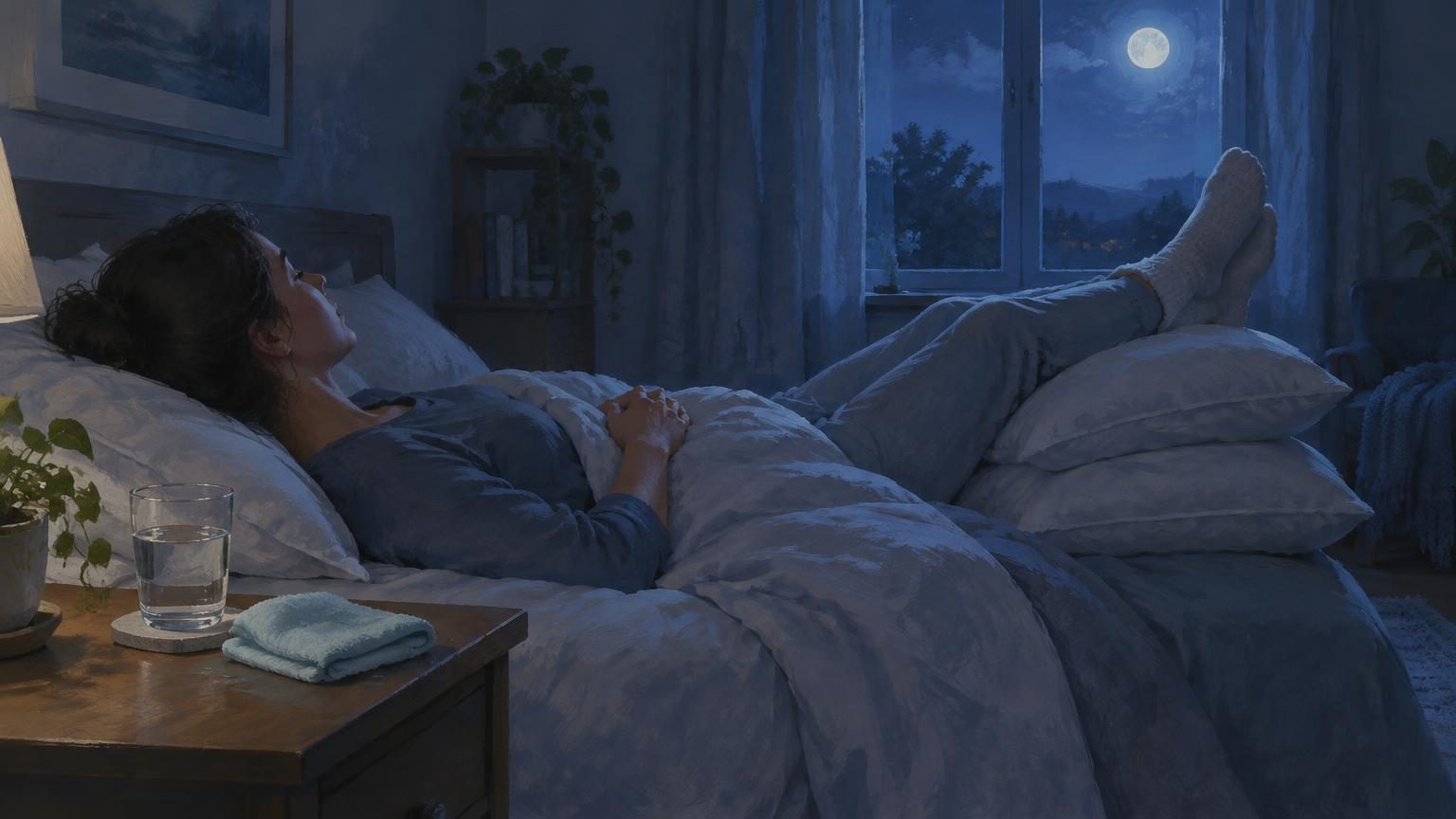
- Body first. Lie down and raise your legs, wear compression if you use it, and sip fluids or electrolytes if your clinician has advised them.
- Cool, not cold. A cool cloth on the face, neck or chest can help some people settle.
- Long out-breaths. Rather than forcing slow breathing, try a double in-breath through the nose followed by a long, easy sigh out.
- Passive comfort. A weighted blanket, gentle background sound or an audio relaxation you do not have to concentrate on.
Day-to-day anchors that may help
- Fluids and salt timing. Spreading fluids and any advised salt through the day, including the evening, rather than all at once.
- A cooler bedroom. Warmth widens blood vessels. Breathable bedding and layers you can kick off help. See managing sleep in winter.
- Smaller evening meals. Lighter meals can reduce blood pooling around digestion.
- Notice your triggers. Alcohol, caffeine, hot showers and, for some, high-histamine foods are common culprits.
PoTS often overlaps with hypermobility syndromes and can feed brain fog and fatigue.
When to get support
Talk to your GP or specialist about new or changing symptoms, and before changing fluids, salt or medication. Call 999 for chest pain, fainting, severe breathlessness or a heart rate that will not settle. If you feel very low or unsafe, call NHS 111 or Samaritans on 116 123.
Common questions
- Why do PoTS adrenaline dumps happen when I am relaxed in bed?
- Shifting position, digesting a meal, warmth or a drop in blood pressure can all prompt the body to release a surge of adrenaline and noradrenaline to compensate. Night-time hormone changes may also play a part, which is why many people wake suddenly in the early hours with a racing heart.
- How can I tell if it is anxiety or a dysautonomia adrenaline surge?
- An adrenaline dump often starts in the body first, with a pounding heart, shaking or tingling, and the mind then looks for a reason. Anxiety more often starts with a worrying thought. The two can overlap, so it is worth talking through your symptoms with your GP or specialist.
- Can certain foods trigger an adrenaline surge with PoTS?
- Large, carbohydrate-heavy meals can draw blood to the gut and worsen symptoms for some people. Alcohol, caffeine and, for those with mast cell issues, high-histamine foods are other common triggers. Smaller, more frequent meals help many people.
- What should I do if my heart rate stays high while resting?
- Lie down with your legs raised, sip fluids if advised by your clinician, and use slow out-breaths. Seek urgent help by calling 999 if you have chest pain, fainting, severe breathlessness, or a heart rate that will not settle. Discuss any new or changing pattern with your GP.
A gentle next step
Try a free live guided relaxation: join lying down, camera off, with nothing to prepare.