Dealing With Isolation and Brain Fog After Therapy
What the quiet gap after therapy often feels like, why brain fog can surface, and gentle ways to hold your baseline steady.
 Written by Kim Clayden — HPD, DfSFH, MNCH, AfSFH (reg), CNHC (reg)
The quiet gap
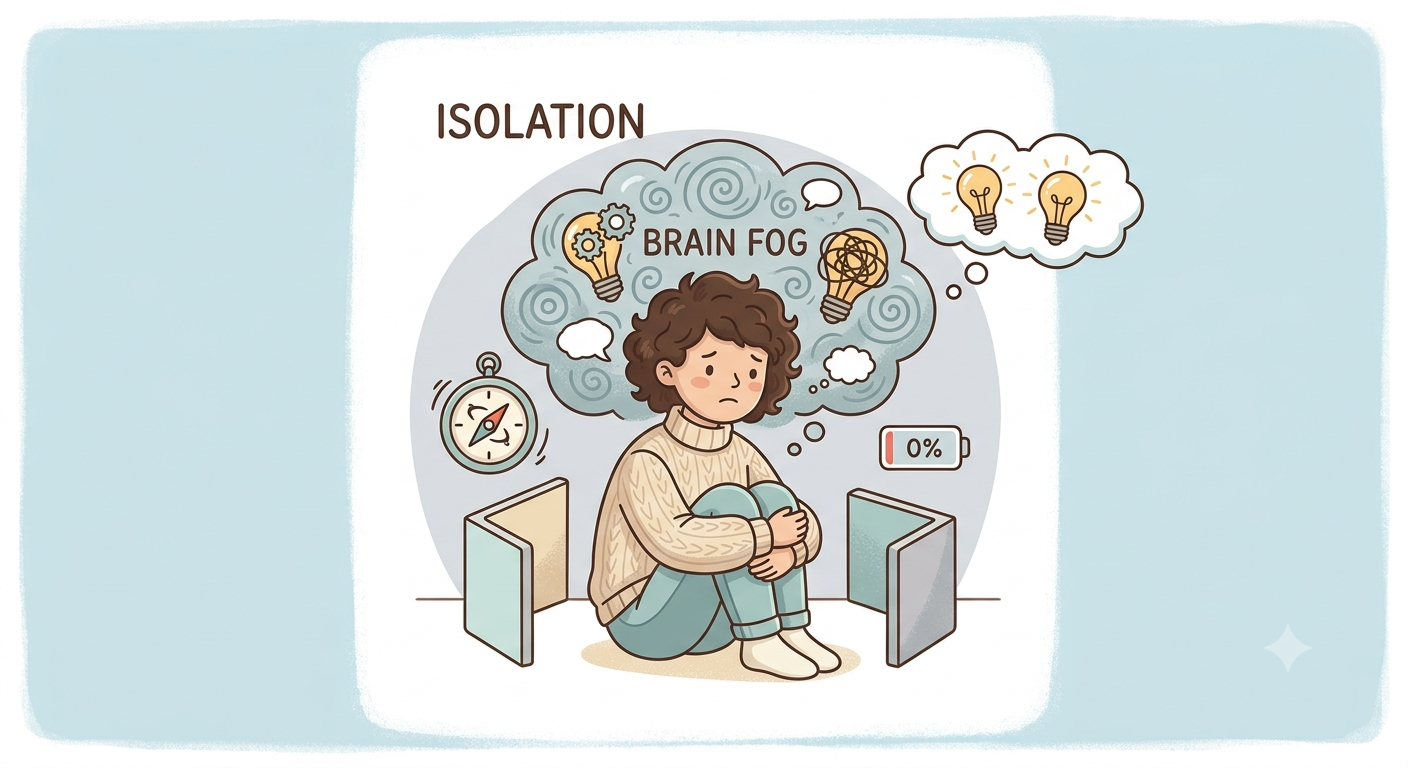
Finishing therapy is usually a good sign, but the weeks that follow can feel unexpectedly flat. Your weekly witness is gone. The rhythm is gone. The person who noticed the small wins is gone. It's normal for isolation to surface here, even for people with strong support networks, because therapy provides a very specific kind of company: attentive, forward-looking, non-judgemental.
That gap is not a sign therapy didn't work. It's a sign it did, and now the scaffolding needs to change shape.
Why brain fog often shows up too
Brain fog after therapy tends to have two overlapping causes. First, if you came to therapy already carrying chronic illness, chronic pain, hypermobility, Long Covid or AuDHD, the fog was probably there all along, therapy just gave you a rhythm that masked it. Second, the emotional integration work therapy did quietly consumes cognitive bandwidth for a while afterwards. Both are temporary. Neither means you're regressing.
Small, kind moves that help
- Name the gap out loud. "I miss the rhythm" is often more accurate than "I'm relapsing". Language matters here.
- Replace weekly presence with weekly presence. Not another therapist, a quiet, low-pressure group where you don't have to perform. A restful body-doubling session or a fortnightly solution-focused check-in covers most of what your nervous system was actually missing.
- Shrink your maintenance list. On foggy days, one anchor beats a five-item routine. Pick the single practice your therapist and you agreed matters most and protect that one.
- Externalise your thinking. Brain fog makes internal planning painful. Write the next step down, even if it's tiny. Reading your own note beats trying to hold the plan in your head.
- Decide your re-entry route in advance. Choose the specific signs that would tell you it's time to book a top-up session with your therapist. Making that decision now removes the guesswork later.
What a post-therapy community should feel like
A post-therapy space is not group therapy. It's not problem-focused. It should feel like a book club for your nervous system: reliable, unhurried, and easy to slip in and out of on hard weeks. Cameras optional, contribution optional, progress measured in gentleness rather than output.
A gentle nudge
If the fog is heavy and the isolation is loud today, nothing has gone wrong. You built a whole toolkit. What you need now is the softest possible scaffolding to keep using it.
A gentle place to land after therapy
Weekly restful body-doubling and fortnightly solution-focused check-ins, designed to protect the progress you've already made.