Why Weather Changes and Barometric Pressure Trigger Flares (And How to Prepare)
Pressure drops, heatwaves and cold snaps can all stir up symptoms. Checking the forecast gives you a few days to get ready, gently.
 Written by Kim Clayden — HPD, DfSFH, MNCH, AfSFH (reg), CNHC (reg)
Feeling the weather before it arrives
If your joints ache before the rain, your head throbs ahead of a storm, or a hot spell leaves you dizzy and drained, you are not imagining it. Many people living with chronic pain, fatigue and autonomic conditions describe themselves as a "human barometer". The good news is that weather is one of the few flare triggers you can often see coming.
Why weather can affect your symptoms
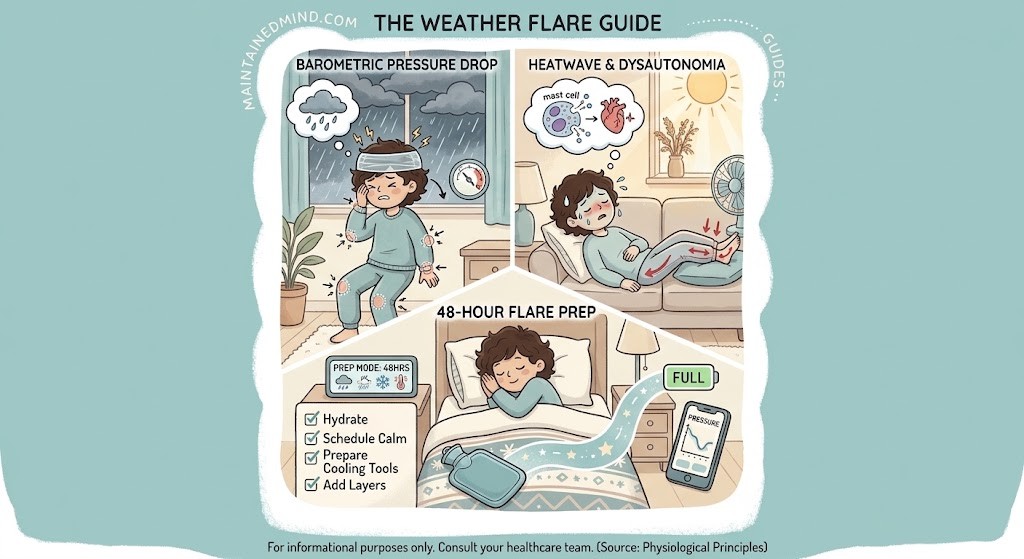
- Barometric pressure drops. Falling pressure before rain or storms is linked by many people to joint pain, headaches and migraines. Hypermobility syndromes such as EDS, HSD and Marfan, and other conditions such as arthritis and fibromyalgia, their joints are often described as especially sensitive.
- Heat. Warmth widens blood vessels, which can worsen dizziness, fatigue and heart rate with PoTS and dysautonomia, and can temporarily worsen symptoms with MS.
- Cold and damp. Muscles tense, circulation slows and stiffness, pain and Raynaud's symptoms can increase.
- Sudden swings. Big changes over a day or two can be harder than steady weather, because the nervous system has to keep adjusting.
Research findings are mixed, and everyone's pattern is different. That is why your own notes matter more than any general rule.
Using the forecast as a flare-prep tool
Look two or three days ahead once or twice a week. Many weather apps show barometric pressure as well as temperature. When you see a big drop in pressure, a heatwave or a cold snap coming, treat it as an early nudge to plan, not a reason to worry.
- Lighten the diary. Move demanding tasks away from the expected change, and leave space either side, in the same way you would with spoon theory.
- Batch ahead. Prepare simple meals, top up medication and have comfort items to hand.
- Lower expectations kindly. A slower day is planned rest, not failure.
Preparing for a heatwave
- Start fluids early. Begin increasing fluids, and any electrolytes your clinician has advised, a day or two before the heat peaks.
- Close blinds in the morning. Keep cool air in before the day warms up.
- Keep your natural radiators free. Your feet and hands help release heat. Bare feet, a cool foot bath or a cool cloth on the wrists can help.
- Plan activity for cooler hours. Early morning or late evening, with rest in the hottest part of the day.
A note on "getting used to the heat". It can be tempting to wrap up or keep socks on before a heatwave to condition your body. For people with PoTS, MS, ME/CFS or heart conditions this can cause blood pooling, dizziness and exhaustion before the hot weather even arrives. Please do not deliberately overheat yourself without medical guidance. Gentle preparation means reducing sudden temperature shocks, not adding heat stress.
Preparing for a cold snap
- Warm up gradually. Layer up before going out and warm the room before you need it, rather than moving straight between very cold and very warm spaces.
- Protect hands, feet and joints. Gloves, warm socks and soft supports can ease stiffness.
- Keep moving gently, if you can. Small, comfortable movements help circulation without using up your energy.
- Look after sleep. Cold, dark days can affect sleep and mood. See managing sleep in winter and the October slide.
Calming the nervous system when the weather turns
Weather-related pain can make the nervous system more alert, which can make pain feel louder. Slow out-breaths, a calming audio or a guided relaxation can help take the edge off. Read more about nervous system regulation for chronic pain, coping with a flare and PoTS adrenaline dumps.
When to get support
Talk to your GP or specialist about new or worsening symptoms, and before changing fluids, salt or medication. In very hot weather, call NHS 111 if you feel confused, very unwell or cannot cool down, and 999 for fainting, chest pain or severe breathlessness. If you feel very low or unsafe, call Samaritans on 116 123.
Common questions
- Can barometric pressure changes really cause joint pain?
- Many people with arthritis, fibromyalgia, hypermobility syndromes such as EDS, Marfans, and HSD report more pain when pressure drops before rain or a storm. Research is mixed, but one idea is that falling pressure lets tissues around sensitive joints expand slightly. Your experience is valid even when studies disagree, and tracking your own pattern is the most useful evidence you have.
- Why do heatwaves make PoTS worse?
- Heat widens blood vessels, which can let more blood pool in the legs and lower blood pressure. With PoTS and other forms of dysautonomia, this often means more dizziness, a faster heart rate and fatigue. Starting fluids and any advised electrolytes early, and keeping the body cool, usually helps more than reacting once you already feel unwell.
- Should I wrap up before a heatwave to get used to the heat?
- No. Deliberately overheating, such as wearing socks or extra layers before hot weather, can cause blood pooling, dizziness and exhaustion, especially with PoTS, MS or ME/CFS. Your feet and hands help you cool down, so keep them free. Gentle preparation means reducing sudden temperature shocks, not trying to train your body to cope with heat stress.
- How can I track weather-related flares?
- Note your symptoms alongside the day's temperature and pressure for a few weeks. Many weather apps show barometric pressure, and some pain-tracking apps record it automatically. Look for patterns, such as pain a day before rain, rather than judging any single day.
- Is it all in my head if my symptoms change with the weather?
- No. Weather sensitivity is widely reported by people with chronic pain, fatigue and autonomic conditions. Changes in pressure, temperature and humidity affect circulation, joints and the nervous system. Noticing the link is a practical skill, not imagination.
A gentle next step
When the weather turns, try a free guided relaxation (live or on demand with a free account): join lying down, camera off, with nothing to prepare.
Free live relaxations
The next date is being set. Recordings of past sessions are there whenever you need them.
Online on Zoom, led by Kim Clayden.
- Join live from bed or the sofa, or watch past recordings on demand
- Free with a basic account. No payment details, no membership needed
- No guilt if a flare means you can't make it live. Recordings are there whenever you need them
Curious about weekly quiet co-working and check-ins with Kim? See full membership