Pacing Without the Guilt: Unlearning Internalised Ableism
Knowing you need to rest is one thing. Resting without the inner voice calling you lazy is another. This guide is about the second part.
 Written by Kim Clayden — HPD, DfSFH, MNCH, AfSFH (reg), CNHC (reg)
The guilt that comes with rest
Many people with chronic illness understand pacing in theory, but find it hard in practice. Lying down in the afternoon, cancelling plans or leaving the washing up can bring a wave of guilt. That guilt is very common, and it often has less to do with you and more to do with the messages we have all absorbed about worth and productivity.
What internalised ableism can sound like
- "Other people manage, so I should too."
- "I haven't done enough today to deserve a rest."
- "If I just push a bit harder, I'll be fine."
- "I'm letting everyone down."
- "Asking for help means I've failed."
These thoughts are not facts. They are learned beliefs, and learned beliefs can be gently questioned.
Why pushing through often backfires
Ignoring your limits can lead to the boom and bust cycle, where a busy day is followed by a crash. Over time, that can mean fewer good days, not more. Read more about why you crash after a good day and pacing for Long Covid and ME/CFS.
Gentle ways to pace without the guilt
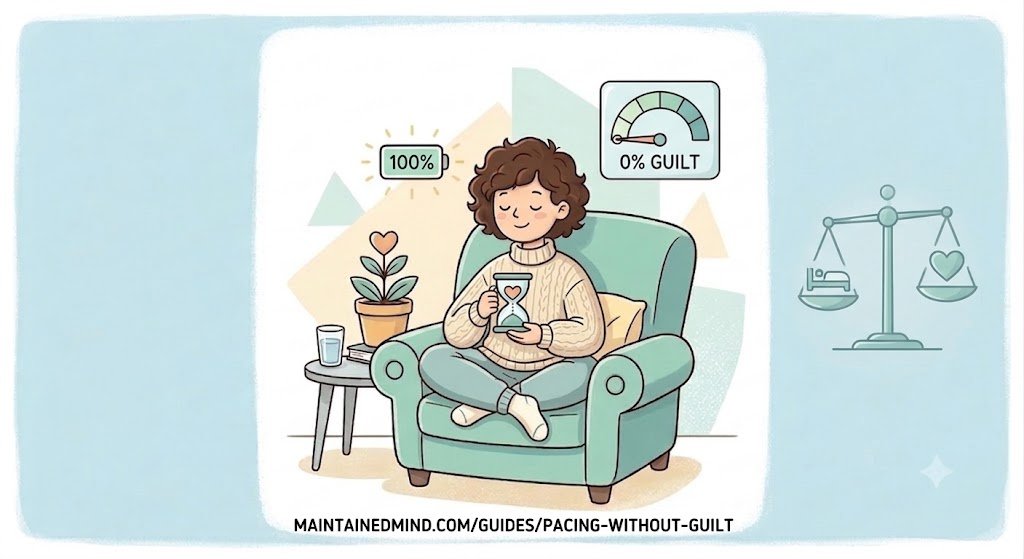
- Reframe rest as treatment. Rest is part of managing your health, not a reward you have to earn.
- Schedule rest first. Put rest in your plan before tasks, so it is not the thing that gets dropped.
- Count what you did, not what you didn't. Showering, eating and resting all count.
- Use a kind phrase. "I'm looking after future me" can quieten the inner critic.
- Notice the comparison trap. Comparing yourself with healthy people, or your past self, is rarely fair.
- Plan with spoons. Spoon theory can make energy limits feel practical rather than personal.
Being with others who get it
Guilt often grows in isolation. Spending time with people who also pace, rest and adjust can make your own needs feel more normal. Read about accountability without hustle and staying mentally well with a long-term condition.
When to get support
If guilt, low mood or self-criticism feel overwhelming, talking with your GP or a therapist can help. If you feel very low or unsafe, call Samaritans on 116 123 at any time, or 999 in an emergency.
Common questions
- What is internalised ableism?
- Internalised ableism is when we absorb society's messages that worth comes from productivity, independence or pushing through, and then turn them on ourselves. It can sound like "I'm being lazy" or "I should be able to do this." Noticing those thoughts is the first step to softening them.
- Why do I feel guilty when I rest?
- Many of us grew up believing rest has to be earned. With a chronic illness, rest is part of managing your health, in the same way medication or appointments are. Guilt is a common reaction, not proof that you're doing something wrong.
- How do I pace without feeling like I'm giving up?
- Pacing is not giving up. It is a way of spending energy on purpose so you have more for the things that matter. Planning rest before you need it, breaking tasks down and stopping before you're exhausted can help reduce the boom and bust cycle.
- What can I say to myself when the guilt comes up?
- Try a short, kind phrase such as "Rest is part of my treatment" or "I'm looking after future me." It may feel unnatural at first. With repetition, gentler self-talk often becomes easier.
A gentle next step
Practise guilt-free rest with a free guided relaxation, live or on demand with a free account. Lying down, camera off, nothing to prove.
Free live relaxations
The next date is being set. Recordings of past sessions are there whenever you need them.
Online on Zoom, led by Kim Clayden.
- Join live from bed or the sofa, or watch past recordings on demand
- Free with a basic account. No payment details, no membership needed
- No guilt if a flare means you can't make it live. Recordings are there whenever you need them
Curious about weekly quiet co-working and check-ins with Kim? See full membership