Somatic Regulation and Nervous System Calming for Hypermobility and PoTS
When "take a deep breath" makes your heart race, you need a different approach. Here are gentle, body-aware ways to settle that work with your body, not against it.
 Written by Kim Clayden — HPD, DfSFH, MNCH, AfSFH (reg), CNHC (reg)
When standard calming advice doesn't fit
Deep breathing, long stretches and seated meditation are often recommended for stress. With hypermobility, EDS, HSD or PoTS, they can sometimes leave you dizzier, more wired or sore. That doesn't mean relaxation isn't for you. It means your body needs a version designed around how it actually works.
Why your nervous system may feel on alert
- Dysautonomia. With PoTS, the body can release more adrenaline to keep blood pressure up, which can feel like anxiety. See PoTS adrenaline dumps.
- Joint instability. With hypermobility, muscles may work harder to hold joints steady, which can keep the body tense.
- Body awareness. Some people with hypermobility find it harder to sense where their body is, which can make the body feel less safe.
- Pain. Ongoing pain can keep the nervous system more alert. Read about nervous system regulation for chronic pain.
Gentle somatic tools to try
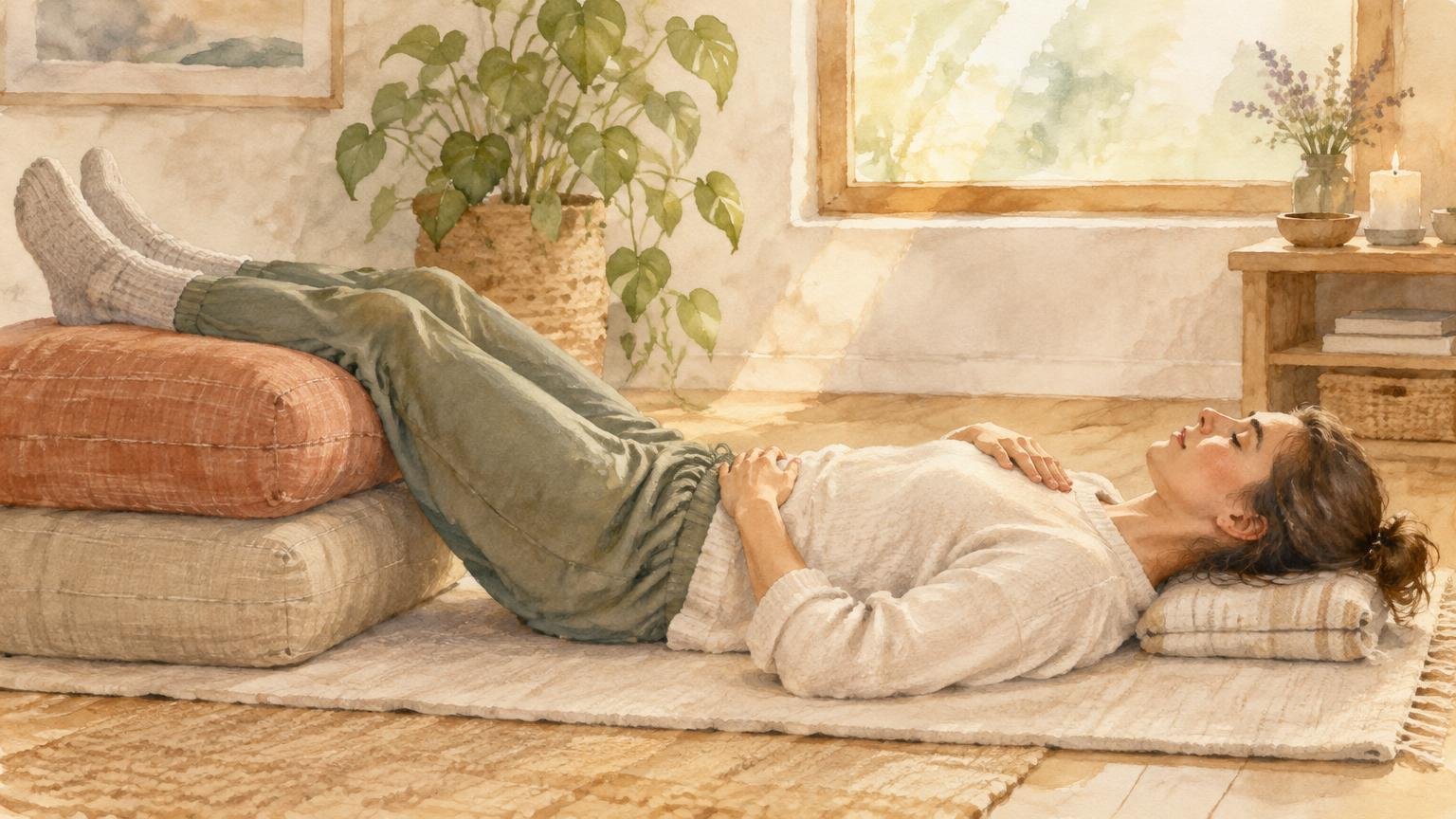
- Lie down and support your legs. Lying flat, with legs raised on cushions if comfortable, can make it easier to settle with PoTS.
- Breathe at your natural depth. Let the out-breath be a little longer than the in-breath. No big breaths and no holding.
- Use pressure, not stretch. A weighted blanket, firm cushions or a self-hug can give a feeling of containment without straining joints.
- Gentle muscle engagement. Softly pressing your feet into the floor or hands together can help joints feel steadier.
- Temperature and touch. A cool cloth on the wrists or a warm hand on the chest can be grounding.
- Orient with the senses. Slowly notice five things you can see or hear, to remind the body it is safe here and now.
Stop anything that makes you dizzy, painful or more anxious. Less is often more.
Building a small daily practice
A few minutes, most days, is usually more helpful than a long session now and then. Try one tool at a time, at a calmer moment, so it is familiar when you need it. You might pair it with your hypermobility energy management plan or a flare plan.
When to get support
Talk to your GP or specialist about new or worsening symptoms, and a physiotherapist who understands hypermobility before starting new movement. Call 999 for fainting with injury, chest pain or severe breathlessness. If you feel very low or unsafe, call Samaritans on 116 123.
Common questions
- What is somatic regulation?
- Somatic regulation means using the body, such as breath, posture, touch, temperature and gentle movement, to help the nervous system feel safer and calmer. It works from the body upwards, rather than relying only on thinking your way to calm.
- Why can breathing exercises make PoTS feel worse?
- Deep, fast or held breaths can change carbon dioxide levels and heart rate, which may trigger dizziness or a racing heart with PoTS and dysautonomia. Slow, comfortable breathing with a slightly longer out-breath, at your own natural depth, is usually gentler. Stop any exercise that makes you feel worse.
- Is it safe to do stretching or yoga for calming with hypermobility?
- Deep stretches can push already flexible joints too far. People with hypermobility often feel safer with stability-based approaches, such as supported positions, gentle muscle engagement and pressure, rather than holding long stretches. A physiotherapist familiar with hypermobility can help you find what suits you.
- What position is best for calming down with PoTS?
- Many people with PoTS find lying down, sometimes with legs raised on cushions, more comfortable than sitting or standing for relaxation. This can reduce blood pooling and make it easier to settle. Get up slowly afterwards.
A gentle next step
Try a free guided relaxation, live or on demand with a free account. Designed to be done lying down, camera off.
Free live relaxations
The next date is being set. Recordings of past sessions are there whenever you need them.
Online on Zoom, led by Kim Clayden.
- Join live from bed or the sofa, or watch past recordings on demand
- Free with a basic account. No payment details, no membership needed
- No guilt if a flare means you can't make it live. Recordings are there whenever you need them
Curious about weekly quiet co-working and check-ins with Kim? See full membership